Women in Ministry: Necessary Preparations

studygirl Coming to a settled position on gender roles and more specifically, women in ministry, is not the simple task that some make it out to be. Whether one falls to either the Complementarian or Egalitarian sides of the issue, there are profound implications for life within the Church and serious effects to be considered in relationships within the Body. Your decision on this issue does not have the same impact theologically as one on an essential doctrine does but it can have far reaching consequences for the life of a church, community, and household.

Deciding this issue responsibly requires that you explore, consider, and understand a vast array of knowledge. Your decision requires more than simple assent to a verse or group of verses within the Bible accepting a singular source as the final word on the subject. “You shall not murder.” is abundantly clear taken alone and there are few, if any, people within the Body of Christ who will argue against the clear meaning and application of this verse. The verses on which many have come to their conclusions regarding gender roles within the church (and sometimes life in whole) in Paul’s letters to the churches at Corinth and Ephesus are not as clear and require much more information be collected before one can arrive at a mature decision.

Properly deciphering the meaning of the key passages on this issue requires that you expend a good deal of energy in study of the Bible as a whole. The first thing that a person must do is place any verse or passage within the larger corpus of the entire Bible, Old Testament and New as well as the history of Christendom. You must devote yourself to developing sound interpretive principles that do not rely on someone else doing all of the work for you. Understanding these contested passages and doctrines requires, for example, that you develop a base of knowledge of the cultures that surround Israel and the early Church and the effect that each had on development of the writing produced there.

Many of the questions that arise during this study come from the grammar and meaning of words in the original language. To decide this issue on the basis of a single English language translation will not suffice. While it is not necessary that you become a linguistics expert, you should avail yourself of resources that can explain the word meanings and connotations that one finds in the Greek (and Hebrew depending on how deeply you want to invest in the topic) text. An interlinear text that matches your English translation is a good place to start.

There are many study skills that are not listed here that can help you come to a mature decision on the issue of gender roles beyond what I’ve mentioned here. The one attitude that can help the most in understanding your position is to recognize that this is not a simple topic with clear cut guidelines (despite what some will tell you.) It is complex and even those within the two camps can find disagreement on the details. As one of my seminary professors said, the more you learn the more complex the subject becomes.

***

The list that follows is not comprehensive by any stretch of the definition but it provides some helpful resources that you may want to add to your library as you become more interested in studying this issue. These are among my tools; if you know of a better alternative I would be interested in knowing about it.

Language Studies
image

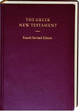
The Greek New Testament is the starting point for language studies. The The Greek New Testament With Greek-english Dictionary is the standard.


image

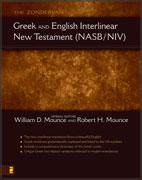
An interlinear places multiple versions of the Bible side by side. I like the Zondervan Greek and English Interlinear New Testament (NASB/NIV) as it puts the Greek alongside my preferred NIV translation as well as the more literal NASB text.
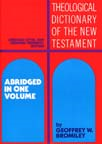


image A dictionary is an absolute necessity when studying languages. As we are aware, each dictionary can provide different insights into a word or word group and the Greek dictionaries are no exception. These tools are very expensive and you may hesitate to invest in more than one for your library. Between the three that are in view on my shelves right now, I recommend the “little” Kittel, the single volume edition of The Theological Dictionary of the New Testament. A sound alternative is the Greek-English Lexicon of the New Testament and Other Early Christian Literature. Another helpful tool is the Greek-English Lexicon of the New Testament: Based on Semantic Domains, otherwise known as the Louw and Nida set.


Introduction and Background

image There are countless volumes that provide cultural information about Israel and the later cultures that the Church would grow within but to be of help, I would suggest starting with Craig Keener’s volumes on the background to particular verses within the Bible. The IVP Bible Background Commentary: New Testament is a good first step that can lead your thinking to ask new questions about the cultural effects that are found in the words we read in the Bible.


image

Introductions to the Old and New testament provide valuable information about each book in the Bible, its context and knowledge about the author that is valuable in understanding the text within. Carson and Moo’s Introduction to the New Testament is a standard.


image

A valuable historical guide to the New Testament is Witherington’s New Testament History. You may not always agree with his conclusions but you cannot argue his scholarship.


Dictionaries
image

Since Paul is often pointed to as the source or instigator of this issue, the Dictionary of Paul and His Letters is an important tool to have on hand when working through his corpus. Equally important in this series is the Dictionary of Jesus and the Gospels so that the Pauline context does not become the only reference on issues.


image

An essential book for any kind of Bible study is a dictionary and my standard go-to is the New Bible Dictionary. I also use the New Dictionary of Biblical Theology. Do not settle for the dictionaries that purport to be for lay people and that are marketed inexpensively. They will often leave you looking for more and wishing you had invested in a more thorough tool in the first place.


It will also be helpful for you to be able to consult a variety of commentaries as you look at various books of the Bible. There are too many in my library to suggest them individually. What I would suggest you do if you must limit the number of resources is to identify one popular evangelical tool ( The NIV Application Commentary series comes immediately to mind), one more technical tool at a level you can utilize (the Interpretation or New International Greek Testament Commentary) and one less technical such as the Holman or  Life Application series. I have concentrated on New Testament resources in this guide but there are equally important and useful Old Testament resources that are needed to understand the entire scope of the gender role issue; it did not start or end with Paul.

Did you notice that none of these resources was specific to the issue at hand? Read and study broadly!

Digg This

Psalm 25 ~ To You O Lord, I Life Up My Soul

Must God be reminded of his character and the covenant mercies that derive from it? In the prayer framework of psalm 25, David approaches the throne in prayer by voicing the grace that is God’s alone to give.

To you O Lord, I lift up my soul; in you I trust, O my God.

Do not let me be put to shame, nor let my enemies triumph over me.

No one whose hope is in you will ever be put to shame, but they will be put to shame who are treacherous without excuse. (vv 1-3)

It’s not so much that God needs to be reminded of who He is or what He is like. Rather, the penitent prayer is suffusing himself with the confidence that comes from rehearsing the promises of God’s goodness in times of trouble.  Here, David puts his trust in God to deal with an enemy that he did nothing to provoke. He trusts that the goodness inherent in God and the promise to shepherd His people will be the hedge of protection that surrounds David and his people.

His approach changes in the verses that follow. Continuing to recite the goodness of Yahweh, David also recognizes and seeks grace for the flaws within himself. The deep contrast is a valuable reminder to us as we enter our prayer closets.

Remember, O Lord, you great mercy and love, for they are from old.

Remember not the sins of my youth and my rebellious ways; according to your love remember me, for you are good, O Lord.

Good and upright is the Lord; therefore he instructs siners in his ways.

He guides the humble in what is right and teaches them his way. (vv 6-9)

Covenant promises are a two-way bond and they require that we not only recognize the goodness and grace that God will exhibit but also, that we recognize and catalog the flaws and corruption within ourselves. We must be penitent before the King.

Digg This

The Parable of the Community Organizer

imageTheologian Susan Sarandon trotted out her tired proverb once again (hopefully for the last time) on inauguration day. In her latest attempt to equate President Obama with Jesus Christ, she said “He is a community organizer like Jesus was.” Continuing her vacuous line of reasoning, she verbally prostrated herself before him saying, “And now, we’re a community and he can organize us.” Civic and national pride is a good thing, but I’ve got to ask Miss Sarandon, where was this pride during the past eight years? Were you among the Diaspora of yearning souls who just couldn’t connect with one another? Ever hear of Facebook?

As I pored over the pages of my Bible I grow concerned that I am unable to find the stories of the Lord’s community organizing. The principle of community agitation is centered on creating a critical mass of humanity to address a problem that they are facing. Kind of like the Boy Scouts, seeing trash in their neighborhood and picking it up. Later, they build a trash bin so that the problem doesn’t reoccur. The Lord Jesus, on the other hand, did not come to organize humanity to address the problem that they had. There was no possible way for them to do so since propitiation required a perfect sacrifice. He was to become that sacrifice, something we would never be able to do on our own. His shepherding consisted of a single message, believe in this grace and put aside your personal god to worship the One who offers it.

I can’t begin to address the small, confined world in which celebrities exist and form their philosophy. Alfre Woodard voiced her tempered opinion of those outside of her bubble, “I think we might finally grow up as a nation.” Fact, Ms. Woodard, most of us grew up years ago.

Digg This

Psalm 24 ~ Who is this King of Glory?

image Who is this King of Glory?

The Lord strong and mighty, the Lord mighty in battle.

Lift up your heads, O you gates; lift them up, you ancient doors, that the King of Glory may come in.

Who is He, this King of glory?

The Lord Almighty – he is the King of Glory. (vv 7-10)


Modern readers will find this short psalm following the stunning promises of the 23rd psalm and as the page turns, it is easy to get swept up in the shouts of acclamation for the Lord. We shall not diminish the praise of this psalm as we place it in its proper context as a processional liturgy. Historically, this psalm is associated with the entry of God into Zion, either at the time David returns the Ark to Jerusalem or at a later commemoration of the event. Our free church environment has largely cast aside liturgy but it serves an important purpose in leading and aligning the hearts and actions of God’s people.

As the King of Glory enters the Temple, we want to follow his train up the steps but the liturgy stops us. Who may ascend this hill of the Lord it asks. We pause to reflect on our own condition.

Who may ascend the hill of the Lord?

Who may stand in his holy place?

He who has clean hands and pure heart, who does not lift up his soul to idol or swear by what is false. (vv 3 – 4)

The liturgical pace halts our thoughts to consider our condition before the altar. We seek the blessing and vindication promised in verse 5 but we must never take it for granted. Let our prayer today be two examine our heart and hands for the bits of the world that might have crept in or on and need to be cleansed before approaching the throne.

Digg This

The Church Cafe and Shallow Worship

imageThe incongruity of the scene doesn’t affect you as you sweep past on the way to the sanctuary so that you might find a seat a least a few moments before the praise team takes their places. The rich, bittersweet smell of the daily roast caught you as you entered the lobby of the church and you wind through the clusters and knots of people surrounding the cafe. The brisk pace that you set for the family belies the fact that the Nine O’clock hour is moments away, but you can’t help but notice the number of people sitting at the little tables sipping coffee and the number of people still waiting in line to purchase a steaming cup of their own. Taking your seat with a minute or two to spare you glance around at the sanctuary which is barely one quarter full. Your eyes close and your head bows and you focus on the process of quieting your heart and bringing yourself fully present to the community worship of God.

As people trickle into the room for the next twenty or thirty minutes, you can’t help but wonder how many of them were sitting outside enjoying their latte as the praise leader skillfully attempted to lead the congregation into the immediate presence of God. Sure, many of the latecomers have no sense of urgency in being present while prayers are lifted up and voices raised in praise; to some it is simply a prelude to the sermon and it serves no purpose other than ritual. Do those same notions fill the hearts of the coffee drinkers? Have we gone too far in attempting to create an inviting environment, so much so that we have abandoned our primary mission as the Church – the worship of God?

I believe we have. I believe that in some instances the Church has leaned so far into the venues of the world in an attempt to be relevant or attractive that we have done so to the detriment of the Church itself. We would do well to contemplate again and again our purpose in convening on Sunday mornings. Is it to meet our needs for fellowship and only incidentally about worship? Or, do we gather at an appointed hour and place specifically to give corporate expression of our love and worship to God? With our answer in hand, we should then strive to ‘cleanse the temple’ of everything that distracts from that purpose, stripping away things that do not direct the people of God in the appropriate direction.

What do you think? Do you think that the cafe/bookstore/etc. contributes to preparing the hearts of the people of God for worship? Or, should these venues be closed and the hospitality ministry be directed to remove any friction between the front door and the chapel wherein people can quiet themselves, put the world aside, and prayerfully seek to know the presence of the Father?

Digg This

Psalm 23 ~ Goodness and Love Will Follow Me

image The Lord is my shepherd, I shall not be in want.

He makes me lie down in green pastures, he leads me beside quiet waters, he restores my soul.

He guides me in paths of righteousness for his name’s sake.

Even though I walk through the valley of the shadow of death, I will fear no evil, for you are with me, your rod and your staff, they comfort me.

You prepare a table before me in the presence of my enemies. You anoint my head with oil; my cup overflows.

Surely goodness and love will follow me all the days of my life, and I will dwell in the house of the Lord forever.

The 23rd psalm is one of the most beloved and well known entries in the Psalter. Though many individual verses have become a part of our praise music vocabulary, many people know this psalm by heart in its entirety. There is an appealing promise in these verses that is painted with vibrant and pleasing verbiage that brings an image of the Good Shepherd (John 10:11) cradling and protecting his lambs. He alone will look out for our every need (though not necessarily our every desire.)

imageIn an age of image we have stored in our minds a catalog of green pastures and quiet waters so these words immediately paint with swathes of verdant, lush tropical greens or the deep  emerald of a grassy countryside. Quiet waters soothe with their deep blues turning to black as the depth increases and pops and gurgles silence us as we strain to catch the song of the water as it moves by. We miss out on the depth of this verse unless we meditate on unforgiving landscape in which the psalmist sees the work of the shepherd.

image The desert of the Middle East is far from the viridescence that our mind shows us as the words are processed in our minds. A dry, khaki, hardened land required extraordinary efforts from the shepherd. Food for the sheep might require movement, the search for water a knowledge of the terrain and the ability to bargain with those who guarded its source. The ewe and ram on their own may stand little chance of survival; dependence on the shepherd is not optional.

imageSuddenly, the imagery changes to one who walks in the shadow of death. The deep and arid Wadi Qelt might be bright at midday but every other hour of the day fills it with ponderous shadows that might hide evil around each bend or rock. Walking alone in this valley, the walls rising high above, the only escape route would be forward or backward and yet the psalmist voices no fear as the Lord walks alongside him.

image Verses 4 and 5 form the core for us in our modern day as they did for Yahweh’s people. Our valley of shadows might be more urban but it holds the same dangers and fears. We will not fear these things though as our Shepherd walks beside us and comforts us. In verse five are presented with the image of the table and the cup, overflowing with good and yet, look carefully at the placement of this table. It is in the midst of our enemies. It is not removed from, guarded from, above, below, or in any way away from our enemies. We will sit with the Shepherd in the presence of our enemies.

You see the Psalmist does not envision an escape from the travails of this world to an eventual dwelling with the Lord in his temple. It is not a psalm of escape. Instead, it is an expression of supreme confidence in the Lord and the knowledge of His intimate presence even as we face trouble and danger in this world. All is for the greater glory of God. Though our pain might be temporary, in the economy of the Good Shepherd it is necessary in the greater picture of His-story. We are blessed in playing our role.

The promise of the 23rd psalm is simple: by following the Good Shepherd we will walk in goodness and love throughout all of our days. It does not mean we will escape the trials and troubles of this world but following the Shepherd will always lead us to better days. No wonder it remains a favorite.

Digg This

The Blue Parakeet Flies ~ Women in Ministry 5

image

Loving the Bible means letting the blue parakeets that we encounter to fly free. It means learning, knowing, and loving all of the Bible rather than a few select passages. If we apply this notion to our final topic, we must bring the entire bible to bear on our process of discernment and the method that we use to decide our position on women serving in church leadership. For example, we improperly apply 1 Cor 14:34-35 and 1 Tim 2:8-15 without also adding Acts 2:16-18:

No, this is what was spoken by the prophet Joel:

“ ‘In the last days, God says, I will pour out my Spirit on all people.

Your sons and daughters will prophesy, your young men will see visions, your old men will dream dreams. Even on my servants, both men and women, I will pour out my Spirit in those days, and they will prophesy.

Prophecy points to women being gifted and called, the Bible tells of women serving the Lord in leadership and teaching, and the fact that we selectively read the commands of the Bible all must lead us to question the manner in which we develop our position on this or any other tradition and command that we practice in our modern age. In this matter, our discernment is going to rest on whether or not we see the crimson thread of Oneness at creation, Otherness after the Fall, and the restoration of Oneness in the Messianic era.

So, what about Paul. Why did he write these passages that have caused so much confusion and consternation within the Church? We can apply historical research to the period in which Paul writes these letters and come to the conclusion that these commands were special and temporal to be applied to a specific situation but not intended to be applied through all of history. Paul himself gives us an insight into his personal process of discernment in 1 Cor 9:19-23 in which he explains that he will go to every end for the sake of the gospel:

Though I am free and belong to no man, I make myself a slave to everyone, to win as many as possible. To the Jews I became like a Jew, to win the Jews. To those under the law I became like one under the law (though I myself am not under the law), so as to win those under the law. To those not having the law I became like one not having the law (though I am not free from God’s law but am under Christ’s law), so as to win those not having the law. To the weak I became weak, to win the weak. I have become all things to all men so that by all possible means I might save some. I do all this for the sake of the gospel, that I may share in its blessings.

Would Paul put women in the pulpit if it had been advantageous for the gospel? I believe he would. In this same fashion, we must consider what we do today in the context of the good of gospel. It’s all in how we understand the Bible and learn to address the Blue Parakeet’s as they appear.

Digg This

Psalm 22 ~ Why Have You Forsaken Me? Part 3

The psalmist turns in the final section of this psalm to the nature of steadfast faith. In the middle segment we encountered the voice of despair as the believer found himself facing travail from every direction. Despite the struggles he knew who would save and redeem him from these challenges. In the closing verses, he praises the Redeemer for the future good that the will bring.

I will declare your name to my brothers; in the congregation I will praise you.

You who fear the Lord, praise him! All you descendants of Jacob, honor him! Revere him all you descendants of Israel! (vv 22-23)

Instructive for us is the expansive view that the suffering man proclaims. It is easy to dwell on our personal issues and troubles at the expense of looking outward to others. The Christian must face the possibility that their suffering is for the good of another, either as instruction and example, or to directly benefit them at your expense. A true and deep faith looks beyond today toward the promise of tomorrow and our eternal time with the Lord.

From you comes the theme of my praise in the great assembly; before those who fear you will I fulfill my vows.

The poor will eat and be satisfied; they who seek the Lord will praise him – may your hearts live forever!

All the ends of the earth will remember and turn to the Lord, and all the families of the nations will bow down before him, for dominion belongs to the Lord and he rules over the nations. (vv 25-28)

Faith always look forward.

Digg This

The Blue Parakeet ~ Women in Ministry 4

BPkeet Let’s use our discernment skills and examine a passage, shall we? Perhaps a good one would be 1 Timothy 2:8-15:

I want men everywhere to lift up holy hands in prayer, without anger or disputing.

I also want women to dress modestly, with decency and propriety, not with braided hair or gold or pearls or expensive clothes, but with good deeds, appropriate for women who profess to worship God.

A woman should learn in quietness and full submission. I do not permit a woman to teach or to have authority over a man; she must be silent. For Adam was formed first, then Eve. And Adam was not the one deceived; it was the woman who was deceived and became a sinner. But women will be saved through childbearing—if they continue in faith, love and holiness with propriety.

Read the passage and break it down into its basic commands. As you tick off each one, make a note of whether or not this command should be practiced today.

1) Males should pray with their hands lifted up.

2) Males should pray without anger or disputing.

3) Women should dress modestly.

4) Women should not have elaborate hairstyles or wear gold or pearls or expensive clothing.

5) Women should have good deeds.

6) Women should be silent and quiet.

7) Women should not teach or have authority.

So, what were your answers? Unless you answered in the affirmative to every single one and live out that commitment you have put some framework of discernment in place with regard to the biblical commands. Can you identify the source of your decision matrix. For example, Paul commands that men should pray with their hands lifted up. I looked about during worship this Sunday morning and noted some hands clasped and most heads bowed but none of the men had their hands raised during moments of prayer. The Apostle also commands that women are to dress modestly but I suspect that what passes for modestly in Southern California or Florida might not be the same as the requirements in North Dakota or Alabama. Is it proper to make cultural adjustments to a biblical understanding or must the first century dress of women be the bar against which all current and future dress is measured? The point here is that there can be reasonable disagreement on the application of these commands and yet, the restrictions on women have become fossilized and made their way as the hard and fast tradition of the Church. Why flexibility on some and not on others? Is our discernment colored by other factors that we are unwilling to give name to?

It’s important to answer these questions for ourselves because many in church are simultaneously willing to ignore the first command of the passage and maintain the last as a hard and fast rule. This, in spite of the fullness of the Bible’s story in which women were active in ministries and leadership throughout the story. Is it appropriate to allow the WKSPs to control the greater body of WDWDs? Genesis 3:16 has become indurate and tradition bound up in its words, proscribing women forever to inferior status. Reading this in context however can lead us to see it as the result of the transition from Oneness to Otherness and the struggles that obtain from this relational status.

How do we respond then to Christ’s restoration of Oneness:

Therefore, if anyone is in Christ, he is a new creation; the old has gone, the new has come! (2 Co 5:17)

There is neither Jew nor Greek, slave nor free, male nor female, for you are all one in Christ Jesus. (Ga 3:27-28)

Do we see the power here that Christ brings? At the very least, the new creation might be seen as a restoration of Oneness between men and women but, even more powerfully, it unleashes the Spirit within to undo the the Fall in our world. Thoughts?