Psalm 73 – It is Good to Be Near God

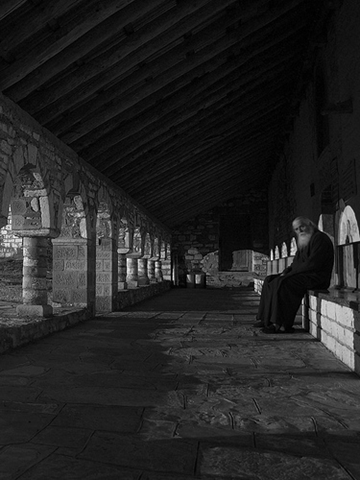
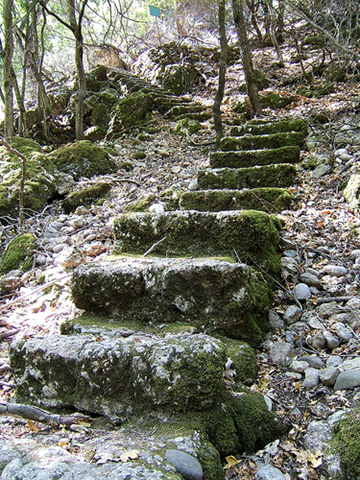
image But as for me, my feet had almost slipped; I had nearly lost my foothold.

For I envied the arrogant when I saw the prosperity of the wicked.

They have no struggles; their bodies are healthy and strong.

They are free from the burdens common to man; (Psalm 73:2-5a)

We rarely hear of the Seven Deadly Sins within our Protestant tradition but we intuitively know that envy is not good. Whether it be the Ten Commandments, selections from the Proverbs, or passages such as Ephesians 4:17-32 being preached, we have undoubtedly been warned against the subtlety of the sin of envy. All sin starts in the mind as we toy with it, roll it over in (what we think is) a safe, hidden environment. The psalmist reflects on this game we all play, allowing the envious fantasy to play about in our minds while, at the same time, dismissing the danger.

What danger? The peril inherent in the truth we know but avoid; the step from thought to action is the shortest of all of our strides. We lose our foothold when envy makes itself at home in our thoughts.

Envy, for the Christian, is an especially challenging issue because the enemy preys on our sometimes immature sense of fairness. Our hearts are tempted to look upon the riches, health, and ease of life the ungodly enjoy and compare it to our struggles or relative poverty and ask, how is this fair God? Why do those who express an open malice toward God appear to have riches that remain out of the grasp of the believer?  The psalmist expresses our moments of doubt well;

This is what the wicked are like—always carefree, they increase in wealth.

Surely in vain have I kept my heart pure; in vain have I washed my hands in innocence. (vv 12-13)

We’ve all been there. We may have even expressed it out loud. Some have stepped over the line to create their own ‘fairness.’ Our hearts have been led astray but Spirit has brought the majority of us back from the edge. Our faith has been renewed as the eventual destination of the wicked becomes clearer in our sight and we realize that nothing is worth the separation it creates between ourselves and our Father.

When my heart was grieved and my spirit embittered,

I was senseless and ignorant; I was a brute beast before you.

Yet I am always with you; you hold me by my right hand. (vv 21-23)

We have faith into eternity, it lasts beyond the next few weeks, months, or years. The Spirit gives us a glimpse of eternity and the wisdom to understand that it is better to be close to God and know His glory forever rather than to enjoy material wealth now and separation later. Doubts approach us from all directions but we give them no harbor. The Lord is our refuge.

Grace and peace to you.

image Bright Star

Psalm 72 – May The Whole Earth Be Filled With His Glory

image

The close of the second book of the Psalter concludes with this doxology:

Praise be to the Lord God, the God of Israel, who alone does marvelous deeds.

Praise be to his glorious name forever;

may the whole earth be filled with his glory.

Amen and amen. (Psalm 72:18-19)

Our sense of forever is tempered by our fleeting existence in this world. Forever for us is the next forty or fifty years. We might have some small sense of what it will be like for our children to live on past our moment but our scope still remains limited.

Recognizing our limited historical frame of reference, we seek to have a positive effect on the world while we are here. The prayer at the center of this psalm is for the strength of the king, that he might have a positive effect and bless the people under his care. As we read these verses through modern eyes we find them strange without a human monarch that rules our lives. For the Christian however, we can see glimmers of the glory of our Holy King, Jesus.

Endow the king with your justice, O God, the royal son with your righteousness.

he will judge your people in righteousness, your afflicted ones with justice.

The mountains will bring prosperity to the people, the hills the fruit of righteousness.

he will defend the afflicted among the people and save the children of the needy;

he will crush the oppressor. (vv 1-4)

Are we faithful to pray for these qualities in our human leaders? Do we seek to embody them in ourselves?


Grace and peace to you.

image by lel4nd

We Band of Brothers

imageBefore opening John Eldredge’s updated edition of Wild at Heart I thought about the changes that have occurred in the lives of men since I read the first edition back in 2001. The landscape of the world has changed. We confront enemies that threaten our families in new and devious ways, we stare at meltdowns in our finances and worklives that are often beyond our control, and our increasingly fragmented relationships have left us more alone than ever. The definition of what it means to be a man, especially a man who is a servant of God, has become more difficult to grasp than ever before. It is an ideal time for the rediscovery of this book.

Eldredge has generated a fair amount of controversy over the years from those who find either his battle against the weakening of men or his theological underpinnings to be questionable. I won’t delve into his theology here except to say that he is not the heretic that some would like to make him out to be. John can occasionally pull a verse out of context in support of his point but he does not do violence to the Scriptures in doing so. Likewise, when Eldredge is bound for burning by those who see him defying Sola Scriptura by saying that God may speak through a movie or song or even the adventure of a climb, he is innocent as was Paul who wrote of all creation being revelation in his letter to the Romans.

Wild at Heart is Eldredge’s call for men to be men rather than the little boys that the culture encourages us to remain through its stereotypes. This man is a man of responsibility, one who takes seriously the call of God on his life. The Wild man is a man who fights for the heart of his King (to borrow a McManus illustration) and remains loyal despite the setbacks that he encounters. Perhaps due to a deficit of modern archetypes, the author leans on bigger than life imagery to incite and arouse the hearts of men to this loyalty. What man is not stirred by the Shakespearean words of Henry V at Agincourt about his band of brothers far more than a Tweet reporting a new coffee flavor at Starbucks?

I enjoyed this book much more as I read this new edition. I don’t attribute this the new or edited content as much as the decade of scars I have accumulated since its first perusal. As we have watched the fading influence of the Promise Keepers, men’s ministry has likewise fallen from favor in the Church at large. Perhaps this new volume can ignite a new movement of men; grown men with their hats on forward, grown men with a deep love and respect for their families, and a growing reverence for their King.


I am grateful to Thomas Nelson Publishers who provided this complimentary copy for review.

In the School of Prayer Day 31 – Pray Without Ceasing

imageBe joyful always; pray continually; give thanks in all circumstances, for this is God’s will for you in Christ Jesus. (1 Th 5:16–18)

And with this, our schooling is over. The Teacher has led us from infancy to adulthood in our practice of prayer and now sends us, diploma in heart, out into the world to minister in His name. We recognize that prayer is more than just petitioning for our needs and wants, it is our connection to the source of life that guides our move each day. Our communion with our Lord directs our prayer (and therefore our life) into alignment with His will. We the saints submit our plans to His.

Prayer for us is more than a quickly mumbled thanks at supper time nor is it a minute or two on Sunday morning. It is practiced with every breath. We train ourselves to be in constant communion, knowing His immediate presence and being in conversation with that presence from moment to moment as we make our way through the day. We are His servants and rely upon His guidance to interact with those who surround us. We seek the way, convey personal needs, and intercede. We pray without ceasing.

Grace and peace to you.

image noemajiriod

Psalm 71 – Be My Rock of Refuge

image

Since my youth, O God, you have taught me, and to this day I declare your marvelous deeds.

Even when I am old and gray, do not forsake me, O God,

till I declare your power to the next generation, your might to all who are to come.

(Psalm 70:17-18)

This prayer issues from a psalmist who finds himself on the back side of his journey and who is looking over his shoulder at those who are just taking their first footsteps on the path of the God follower. The elder knows that his enemies will mistakenly see him as vulnerable and weak because of his advanced age but he is also aware that they do not see God’s hand on his life. The psalmist pleas for Yahweh’s continued shield over him to serve as both protection and a revelation of the divine presence that surrounds him.

Balancing the petition for rebuff of the enemy is the psalmist’s continued praise and attribution of glory to the Lord. The praise emanates from deeper than the surface; despite the struggles that God has allowed in his life, the psalmists insists that God is fully and wholly good.

Your righteousness reaches to the skies, O God,

you who have done great things.

Who, O God, is like you?

Though you have made me see troubles, many and bitter, you will restore my life again;

from the depths of the earth you will again bring me up. (vv 19-20)

Oh, that we would continue to praise God despite our circumstance! Though we might might be long in years or just placing our foot onto the path, to know, really know, that despite the roadblocks, snares, and setbacks that God is with us and to praise him is our greatest calling. We cannot be fooled by our eyes or other senses, God is good and worthy of our praise in every moment. Will my lips close for the final time with this prayer on them?

My lips will shout for joy when I sing praise to you – I who you have redeemed.

My tongue will tell of your righteous acts all day long,

for those who wanted to harm me have been put to shame and confusion. (vv 23-24)

Grace and Peace to you.

image by Luke Scowen

In the School of Prayer Day 30 – The Priesthood

image

As you come to him, the living Stone—rejected by men but chosen by God and precious to him— you also, like living stones, are being built into a spiritual house to be a holy priesthood, offering spiritual sacrifices acceptable to God through Jesus Christ.
(1 Pe 2:4–5)

As our training at the foot of the Master comes near to its conclusion, the time comes to assume the mantle of priesthood that is to be the burden of all of His believers. The ministry of intercession takes on a new importance and requires a more mature reverence than we possessed prior to our tutelage. It is our highest privilege and the clearest sign of our nearness and likeness to Him.

The priesthood makes nonnegotiable demands. You no longer live for yourself; you live for God and with Him. Your walk is in holiness and purity, not the worldliness of our previous life. You have been separated by the grace of your Father, called aside to serve Him and His people. We don’t view this burden as impossible to bear, it is a light yoke upon our shoulders and a pleasure to carry.

Consider carefully whether or not you are willing to offer yourself for this work. The surrender that it demands is nothing less than the complete giving-up modeled by Jesus. It is for those that view their salvation as more than fire insurance. It is a calling to God’s side to campaign with Him. What a privilege.

Grace and peace to you.

image Nick K

Psalm 70 Let God Be Exalted

imageHasten, O God, to save me; O Lord, come quickly to help me. (Psalm 70:1)

How often have we heard or said these words? Come now Lord, save me now! Our urgency must, through our pleas, become the Father’s urgency. We bring God’s time into our infinitesimal lifespan rather than seeking to understand our life in the span of eternity. Shall we not trust Him to save us tomorrow rather than today?

Our impatience is linked to our view of God’s glory. We believe that were He to save us now it would be to His greater glory rather than waiting until tomorrow. Our view down the corridors of the future ends at the tip of our nose and sometimes, our trust ends there as well.

Yet I am poor and needy; come quickly to me, O God.

You are my help and my deliverer; O Lord, do not delay. (v5)

Grace and peace to you.

image by adesigna

Disciplined Steps to Worship

image One who apprehends worship as a spiritual discipline is going to stand forever separated from the mass of believers who treat worship as a singular event that occurs once per week. She is going to be intentional about the assimilation, preparation for, and spirit of worship. When worship is an event, minimal preparation is necessary; you need only appear at the appointed time and ‘worship’ when the music begins. It becomes a check list item.

For those who correctly see worship as contributing to their spiritual formation, there are number of exercises and attitudes that can be integrated into your practices in order to build up the strength necessary to properly worship the God of the universe. Is anything less rigorous true worship?

A disciplined worshipper will practice the presence of God as a regular part of their lives. Paul wrote of developing the proper spirit needed to worship: Be joyful always; pray continually; give thanks in all circumstances, for this is God’s will for you in Christ Jesus. Do not put out the Spirit’s fire; (1 Thess 5:16-19) A mindset fixed in this way will heighten the expectancy of a meeting with God in worship, an encounter that change you.

A disciplined worshipper will seek out different worship experiences. She will worship alone and worship in community. He will find private moments to worship in solitude and will express the magnificence of God in public.

A disciplined worshipper will be intentional about preparing for the community worship experience. He will be physically prepared (rested, nourished, hydrated) and spiritually prepared (prayed through the services, confessed his sin privately).

A disciplined worshipper cultivates an attitude of Holy Dependency so that in the midst of the act of worship, she is completely dependent on God for anything at all. Any hint of manipulation is found to be abhorrent. So neither he who plants nor he who waters is anything, but only god, who makes things grow. (1 Cor 3:7)

A disciplined worshipper is not distracted by events around him. Instead, he allows God to speak to him through the crying baby, the stifling heat, or the dancer in the aisle. Bless them, pray for them, see if there is a message embedded in what has grabbed your attention. Be in community.

A disciplined worshippers offers sacrificial praise and devotion even when he doesn’t feel like it.

A disciplined worshipper recognizes that true worship ends in obedience. To stand before God is to change.

Grace and peace to you.

image by miki

Deepening Your Spiritual Intelligence Quotient

image

Spiritual immaturity is one of those problems within the modern Christian church that is known, discussed, and programmed with little fruit to show for all of the myriad efforts. Cultural forces have allowed the intentional pursuit of discipleship to fall from favor in the Church, only to be replaced by a more casual approach, maturity by osmosis. Spiritual muscles have gone soft with a commensurate lack of influence in the world.

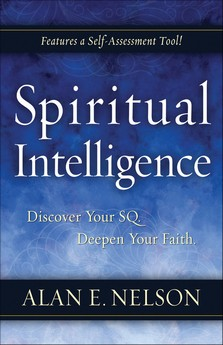
Alan Nelson’s contribution to the library of spiritual development is his newest book, Spiritual Intelligence. Borrowing loosely from Goleman’s Emotional Intelligence, SI is measured by the ability to translate the Christ-likeness that we hear about in sermons, talk about in small groups, and even occasionally encounter when opening our bibles into transformative application in our day to day lives. Just as many social problems are attributable to a low EI, lack of spiritual maturity reflects deficit SI.

Nelson doesn’t offer a quick three-step solution to this problem. True spiritual maturity with meaningful depth is not gained by watching a DVD series with your cell group followed by some obligatory conversation and snacks. It requires an intentional workout, one that takes time, effort, and dedication with none of the social status that comes with being seen at 24 Hour Fitness. The path to growth that he advocates mirrors the rigorous investment that Jesus made in His original disciples. The ‘travel team’ is the modern equivalent of Jesus’ band of brothers ( now brothers and sisters ), and intentional assembly that are in covenant agreement with one another to travel the challenging terrain of discipleship together. They will love you and hold you accountable as you will them for consistent gains in spiritual fruit, humility, and the demonstration of a lifestyle that is consistent with the faith your profess.

One of the fine attributes of this book that will also turn off many readers is that Nelson states that there is no single path or experience that will culminate in maturity. He rightly recognizes that, like the original disciples, we are all vastly different people who will each follow a slightly different road to growth. The book offers a wide variety of mapping strategies, suggestions for the inclusion of a Pathfinder, and strategies for avoiding the inevitable plateaus and days of back tracking. Unlike a 40 day schedule that excites the church for a month and a week, SI emphasizes that the methods of Jesus apply to the whole of our lives, from “pampers to depends.”

When you turn the first few pages you will be tempted to put it aside as I did. You have encountered everything you will read in SI in little bits here and there and the temptation will be to dismiss this as derivative of everything that came before it. Pick it up though and read it again. There is a rigorous demand that supports the ideas, a program of growth that will drain all that you can offer just as the Disciples were drained by their three year internship with Jesus. He took his band on a road trip of epic proportions experiencing joy, disappointment, frustration and love along the way. When it was time for them to display their SI, the individual disciples made an imprint on the world that is still being felt today. Isn’t that what you want to do with your life?

I’m grateful to Baker Books who supplied this copy for review.

Psalm 69 : May Your Salvation Protect Me

imageOn the cross at Calvary the perfect innocent was crucified. Though charges were leveled and accusations screamed about Him, there was no guilt in the verdict of the ultimate Judge. The Savior knew and trusted in the ultimate outcome of The Plan.

Though our voices ring with affirmation of our trust in God and His Plan, the immediacy of the struggles we face excite the doubting voice in our hearts. Why God? Why do you allow your saints to be falsely accused while the mockers go free? No answer has ever been given except, “trust me.”

Save me O God, for the waters have come up to my neck.

I sink in the miry depths, where there is no foothold.

I have come into the deep waters; the floods engulf me.

I am worn out calling for help; my throat is parched. My eyes fail looking for God. (Psalm 69:1-3)

Along with Psalm 22, this scripture is found most often in the New Testament. The authors (as well as modern Christians) found the parallels with the innocent suffering of Christ to be the perfect descriptive words. John speaks of Jesus’ rejection by His own people (Jn 15:25) and his motive in driving out the traders from the Temple (Jn 3:17). The other gospel authors heard the words of innocence being put to death ( Mt 27:34; Mk 15:23; Lk 23:36; Jn 19:19-30) and Paul related the meaning of His suffering (Rom 15:3) to this psalm.

for zeal for your house consumes me, and the insults of those who insult you fall on me. (Ps 69:9)

For even Christ did not please himself but, as it is written: “The insults of those who insult you have fallen on me.” (Rom 15:3)

Trusting that our struggle is for the greater good is one of the greatest challenges that we face. Our innate sense of what is fair doesn’t have a category into which we can organize our pain in the face of the guilty walking free of injury. We must simply trust.

I will praise God’s name in song and glorify him with thanksgiving.

This will please the Lord more than an ox, more than a bull with its horns and hoofs. (vv 30-31)

Grace and peace to you.

image by prilfish