A Closer Walk with Thee

Living Close to God by Gene Edwards

image

Never forget that even those among us who are spiritually dense have a wonderful chance of knowing Christ in the depths.

Author Gene Edwards saves this pithy promise until the very end of the brief guide, though it would have served well in the introductory pages. In an everyman’s spiritual disciplines guide, Edwards attempts to remove the layers of challenge and mysticism that often accompany the Christian’s attempt to deepen the bond between Savior and self. On many levels Living Close to God succeeds in this objective, but on others the authors suggested practices don’t seem to bear fruit.

Edwards strives first to change the nature of a core spiritual practice, prayer. Laying a foundation that paints the average prayer as a one-way list of petitions, the author transforms the 23rd psalm from a memory exercise to a personal communiqué to God. He suggests that by personalizing the words we transform our prayer from impersonal to personal and feeling the presence of Christ in the words and, by extension, in real conversation with us. Nothing complicated, nothing too mystical. The simplicity of Edwards ideas is immediately applicable and can be beneficial for Christians who have tried other, more complex methods of deepening their faith.

Each of the tools that the author includes has but a single objective, a greater awareness of the presence of God. Much like Brother Lawrence, Edwards is rooted in reality of a workaday life. He strives to find “hooks” throughout the day which serve as reminders of God’s intimate immediacy and ways in which the spiritually aware Christian can partake of that communion. These tools are packed into a short book that can be read quickly. The organization could stand some improvement as the chapters that are only a few pages in length seem more like random thoughts that the author wanted to include rather than parts of a cohesive whole.

I am grateful to Waterbrook Press who provided this book for review.

An Unclear Mission

The Jesus Mission by Steven K. Scott

image

Despite the warning that we should not judge a book by its cover, in the case of The Jesus Mission we are left with few other options. The title insinuates that the four missions that Christ assigns to you and me will be outlined such that we can take them up. Unfortunately, when the reader turns the pages of the Steven Scott’s book, the premise fails to materialize. The author relates story after miraculous story in the lives of people that the author knows but never comes to a point in the poorly organized text.

Author Scott is a rags-to-riches promoter who claims more than once that his monetary and business success is a result of reading the book of Proverbs. In the introductory pages, Scott points out that we as Christians can partner with Christ to pursue four lifelong missions, answering the question “what does God want from me.” The four missions are to become more intimate with God, accelerate your personal growth, empower other believers to better follow Christ and to impact the lives of nonbelievers. The pages devoted to these missions amounts to a scant 22 percent of the entire book, causing Scott to delve into myriad other areas in order to fill out the book.

Digging further into book, the reader is left to wonder who the target audience is. Part three, for example, is entitled What You Never Knew About Jesus That Will Change Your Life. Turning the page to the chapters that follow once again finds the author floundering in fulfillment of his premise. There is nothing in the pages that is wrong, but there is also nothing that growing Christians do not already know. Was this section of the book intended to underpin the ‘missions’ section? If so, the reader would have been better served to have this supporting material interspersed throughout the missions and task lists giving encouragement and edification.

Discovering one’s calling in Christ requires prayer, study and meditation on the scriptures. You can begin by turning to Matthew 28:18-20, committing your life to the words of the Savior therein and then allowing the Holy Spirit to guide your steps going forward. Simple. Sadly, the complexity and organization The Jesus Mission is anything but.

I am grateful to Waterbrook Press who provided this copy for review.

Rolling in The Deep

Going Deep by Gordon MacDonald

image

“The desperate need today is not for a greater number of intelligent people, or gifted people, but for deep people.”
― Richard Foster, Celebration of Discipline

Returning to the fictitious church he first introduced in Who Stole My Church?, Gordon MacDonald unfurls the story of a group of Christians returning to discipleship as a priority in their lives. The discipleship is not solely for their own spiritual edification, as the modern interpretation has formed it, but for the purpose of leading others into a deeper relationship with Jesus. Rather than intelligent people with a faith in the brain, MacDonald emphasizes the growth of leaders who have a depth of heart, a weight that enables them to lead others to an ever deepening faith.

As he did with the previously noted book, MacDonald uses the parable format to teach the importance and process of dreaming, forming and implementing an intentional leadership process. While the topic certainly lends itself to a step-by-step, factual format, the use of story allows for a greater depth of discussion. For example, MacDonald could point out that some of those mentored would fail and then rehearse a process of discipline and restoration. By embedding the failure in hockey devotee Damon Marsh on the other hand, the entire sequence of prayerful selection, invitation, meeting, mentoring and failure enables the reader to see it happening, perhaps even seeing a potential disciple in front of us. The same things that make the narrative of the Bible so effective in teaching us the ways of God make Going Deep especially useful for those leaders who want to take their bodies deeper.

Church leaders and potential leaders will find much to apply in MacDonald’s book. The story carries the principles along without the need for bullet points or a study guide. Coming to the conclusion of the story, the reader who is interested in implementing the idea are left with many questions. I think this is evidence of MacDonald’s wisdom as it requires that the reader ‘go deep’ themselves in order to localize and discern the answers on their own. Even if the book is read simply for your personal application, you will come to end not being satisfied with the shallow waters near the shore any longer.

I’m grateful to Thomas Nelson who provided this copy for review.

www.thomasnelson.com

Journey to Nowhere

The Sacred Journey by Charles Foster


image

A promising premise—a call for the restoration of the spiritual journey—is fumbled by the author’s frequent foray into the territory of moral equivalence. Why Foster feels the need to make Hindu or Buddhist pilgrimage practice an example for Christians to follow escaped me as I read this volume. The frequent parallels give the book an uncomfortable tone and tend to overshadow the paragraphs in which Jesus actually makes an appearance.

Mr. Foster does make an important point regarding to Jesus that benefits the reader if it can be extracted from the text. The Lord was not sedentary, situating himself in the Temple and demanding that people ‘come to me’. Rather, He is a Lord of movement, of pilgrimage. His command is to “follow me”. He moves forward, taking message and the reality of the Kingdom to His chosen destination.

The Sacred Journey is a weak entry in The Ancient Practices series of books. Perhaps Mr. Foster was not the author to develop this volume, as his journeys appear to involve a lot of observation but little purpose other than some vaguely alluded to spiritual cleansing. As a travelogue, Anthony Bourdain’s viewers will enjoy the subtle mockery, but as a spiritual guide it brings nothing new to the conversation.

I’m grateful to Thomas Nelson publishers who provided this copy for review.

Turn Left at the Blinking Light

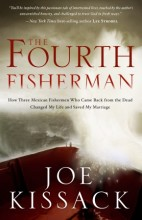
The Fourth Fisherman by Joe Kissack

image[Fade from Black] Camera pans from a calm sea to the prow of a small fishing boat. Voices speaking Spanish in the background as a man walks the beach toward the vessel. As he comes into focus, he is not dressed for fishing and appears to be looking for something. The scene turns with his gaze, sweeping the ocean and then spying a dock further down the beach, the camera follows him as he walks toward it, away from the boat. [Title]

Stories that appear separated that intertwine to lead to an intersection unexpected by the audience are a Hollywood staple. Better yet are divine stories of lives brought together by The Director. Such is the The Fourth Fisherman, the tale of four lives transformed by circumstance unforeseen when the first steps were taken. Author Joe Kissack recounts how his life of Hollywood success led him to the fishing villages in Mexico while a group of impoverished Mexican pescadores  was simply trying to survive the ordeal of being lost at sea for ten months. A growing faith in God brings them together in the port town.

Kissack’s trajectory was taking him higher and higher on the success ladder. He had money, power and prestige. He was also medicating himself, burning himself out on the treadmill of the television industry trying to keep one step ahead. Though he has the outward trappings of success, he finds himself empty inside, wrestling with impressions of inferiority left by his father and the demands of  trying to have it all. Ultimately, he cannot, setting the crisis stage for an encounter with Jesus.

The alternate path through life is portrayed through the lives of five Mexican fisherman who set out on a trip that soon turns bad, leaving them adrift in the Pacific for months on end. Death, hunger and despair challenge them while their faith grounds them, giving them the hope needed to continue scanning the horizon for any sign of rescue. When a ship finally sees them bobbing on the waves little energy remains in the party for celebration.

Kissack skillfully weaves these two threads together to show how God arranged for them to intersect. Though the full ending remains to be written, the story is an inspiration for those wondering about the purpose of their personal crucibles. God doesn’t waste our struggles. They serve a purpose in His larger story, and we only pray that we have sufficient awareness to see that purpose further on down our own road.

I am grateful to Waterbrook Press who provided this Advance Reading copy for review. The book will be available on March 12, 2012. Contact www.waterbrookmultnomah.com for more information.

Binding Himself and All of Us Together

The Sacred Meal by Nora Gallagher

image“It’s Easter Sunday. A group of men are in prison. They are part of the more than ten thousand political prisoners in this country’s jails. They wan to celebrate communion, but they have no wine, no bread, no cup, no priest…”We have no bread, not even water to use as wine,” their leader says to them, “but we will act as though we have.”

Such is the nature of the Lord’s Table in Christian practice. In all conditions, in wealth and in want, practiced with liturgical precision or among small groups, the Bread and the Cup were given as a constant reminder of the presence of Christ with His people until the day He returns. Nora Gallagher surveys the thoughts and emotions of those who serve and receive the elements, giving us a glimpse of the complexity of the Eucharist.

At the heart of her writing is Ms. Gallagher’s thread of our common connection. In each approach to the table she emphasizes how participation in communion serves as a binding force, tying you and I together even when have allowed the intrusion of negative influences to drive us apart. This is a biblical truth that is often dismissed. We may not be on speaking terms with one of our ‘brothers’ or angry with a ‘sister’. The manner is which we structure our lives enables us to avoid those we dislike or are in conflict with, separating the idea of a common inheritance given in the Scriptures, and our practice of daily living. Approaching the table, on the other hand, allows us no shadow in which to hide. Whether it be a common cup or the same loaf from which we pull our piece of bread, we cannot escape the fact of our familial heritage.

Many will find Nora’s overly poetic work attractive. Those of a more analytical bent will struggle to find meaning in personal memories and sudden realizations that Ms. Gallagher utilizes to illustrate her points. This is little practical material in this volume, so those seeking methods or liturgy are directed elsewhere. For one who seeks a contemplative consideration of the practice and effect of the Table, The Sacred Meal will be satisfying.

I am grateful to Thomas Nelson for providing this review copy.

Practice Makes Possible

Finding Our Way Again by Brian McLaren

image“Everybody wants to go to heaven, nobody wants to die.” Peter Tosh

As the late Winston McIntosh said, we strive to possess things but often do not want to do the work necessary to attain them. Within in the realm of Christianity, this is visible in people who want a transformed character without doing all of the work necessary to attain it. Modern Evangelical culture nourishes this empty desire through its promotion of a church-centered spirituality wherein transformation is supposedly a product of attendance at church-sanctioned events. Apparently, it is to be passed via osmosis.

McLaren, in his introduction to The Ancient Practices Series, puts this mythology to rest. Finding Our Way Again spells out the objective of this series of spiritual formation books that are rooted in spiritual disciplines that have encouraged the character formation of millions of saints through the centuries. In the short chapters that follow, he surveys the topics that form the center of the individual volumes that focus on each in greater detail.

If you read Finding looking for detailed instruction in the formative practices you will be disappointed. Once McLaren has established the benefits and need for the disciplines, the chapters that survey are but an amuse-bouche, teasing you into a further exploration. His style is appealing, intertwining personal reflection, ancient patristic writings and clear benefits that derive from the integration of the spiritual disciplines into your life.

Many Evangelicals have developed a fear of McLaren due to his provocative approach to matters within the Christian community. Other than a few references that appear to impart a kind of equality amongst the Abrahamic faiths, there is nothing that should dissuade a broad readership for this volume. Finding Our Way serves as a useful index for the rest of the series, a book that you can return to again and again when searching for a new discipline to explore.

I am grateful to Thomas Nelson who supplied this book for review.

Consider It Pure Joy

Desiring God by John Piperimage

In the pursuit of joy through suffering, we magnify the all-satisfying worth of the Source of our joy. God Himself shines as the brightness at the end of our tunnel of pain. If we do not communicate the He is the goal and the ground of our joy in suffering, then the very meaning of our suffering will be lost. The meaning is this: God is gain. God is gain. God is gain.

Few would mine the treasure that is Desiring God if the preceding paragraph was at the beginning of the book rather than on the last page. Theologically deep, spiritually demanding, and rich in transformational thoughts, Pastor John Piper’s most challenging book requires an intellectual commitment from the reader that is contrary to the majority of non-scholarly Christian books on the shelves today. To place the most personal challenge anywhere but at the end of the journey would frighten away those remaining souls who will invest the effort needed to comprehend the notion of Christian Hedonism and then apprehend the application to their lives.

The concept of Hedonism in a Christian sense is not without its detractors, many on the grounds of terminology alone. Piper, however, makes an outstanding case in support of the pursuit of happiness in God with Him as its foundation. As His people pursue, apprehend and praise Him for their happiness, God’s joy is elevated. In His delight He desires more of the glorification that comes as His people experience more of the joy that is derived from their relationship with Him in all of its contours. Desiring God seeks to give the reader scriptural arguments to not only show that this is true and right, but also to enable the reader that joy comes in many forms, including some that we don’t normally identify as its source.

For twenty five years, Desiring God has found its way onto must-read lists as an important contribution to the spiritual formation literature. Like all things worthwhile, it requires effort to read and commitment to apply. The book does not invite a casual approach. It must be read in short segments, allowing plenty of time for meditation and the examination of scripture. Desiring God offers the greatest benefit to those readers who will pick it up again and again as one’s relationship with God grows and the ideas can be read through more and more mature eyes.

Read this book. Read it alone or with a study group. Find the joy in all aspects of your life and allow Dr. Piper to guide you to see how that simple act glorifies God. As you begin to understand His joy in you and your pursuit, you will find that you cannot get enough and that the passion for His glory will rule your life.

At the Sound of the Bells–Praying the Daily Office

image

In Constant Prayer – Robert Benson

This entry in Thomas Nelson’s Ancient Practice Series centers on the spiritual discipline of praying the Daily Office, a regularly scheduled set of prayers to be recited by members of the Church. Benson introduces the practice, making it accessible to the great swaths of the Evangelical Church that have moved a good distance from our liturgical heritage. His irenic spirit is evident throughout as he teaches the meaning, practice and application of the Office.

In Constant Prayer stands apart from most other prayer guides currently filling the shelves that focus on attitude, preparation, proper approach and the journaling of answer. Mr. Benson opens the door to a prayer life that encompasses the whole of our day, rather than the prayer by appointment that has become our modern standard. The Daily Office consists of a series of prescribed prayers, praises and scripture readings that are to be lifted to God at specific hours of the day. It is rooted in ancient practice that has struggled to survive in the modern workaday world.

Robert shares the methods and sources of the Office in a most winsome fashion that is appealing to both the contemplatives and the analytics within the Church family. Far from a droll manual of prescriptive steps (since anyone opening the The Book of Common Prayer can figure out the mechanics), he allows us brief glimpses into the benefits that he has accrued as a result of integrating this spiritual discipline into his life. Unlike many prayer works that leave the average Christian feeling as though a life of prayer is unattainable by anyone other than spiritual giants, Benson’s invitation leaves you on the final page unable to wait to become a regular participant in the process.

Thomas Nelson graciously provided this copy for review.

Therefore Go

Our Last Great Hope by Ronnie Floyd

image

A fair percentage of the people sitting in our pews on Sunday morning would claim at least a passing familiarity with the Great Commission. A smaller percentage would be able to correctly locate it at the end of Matthew’s gospel. Fewer still would understand the far-reaching implications of these verses.

And only a handful would see the words of Jesus as applying to them personally.

This lack of apprehension lies at the core of Ronnie Floyd’s latest book, Our Last Great Hope. Pastor Floyd seeks to spark a renewed fervor for the mission of the Church in its call as the final hope of the world. Moreover, he wants to personalize the mission to individual believers. So many times, the church views this commission as applying only to the pros: the missionaries, pastors and other spiritual mentors. Pastor Floyd dispels this thinking throughout the book, speaking directly to the reader and imploring them to own the commission.

Floyd writes with a pastor’s heart for the lost and in a preacher’s exhortative voice. The pages ring with the active language of a Sunday sermon and the eyes of the pastor pointed directly at you. As the Christian mission is dissected, Pastor Floyd lays it in your lap and challenges you to claim that reaching the lost isn’t your responsibility. Good luck.

Floyd’s approach to awakening the Church contributes to the success of the book. Rather than a step-by-step, theological-practical treatise, the pastor writes about reorganizing our lives in ways that place us in the perfect position to step up and fulfill our calling. Instead of confronting the reader with the bottomless needs of the city, for example, pastor speaks to the transformation of our families that will naturally encourage engagement in the mission.

Ronnie Floyd has given us a fine book for sparking a renewal of the Mission. Irenic in tone, Our Last Great Hope is nonetheless urgent in proclaiming the need. Read this book and then go.

I am grateful to Thomas Nelson who provided this book for review.