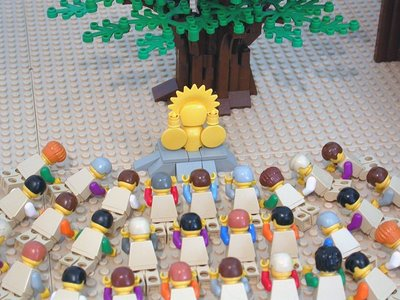
Psalm 4 – Answer Me When I Call

How many times have our prayers started with a pleading before the throne?

Answer me when I call to you, O my righteous God. Give me relief from my distress; be merciful to me and hear my prayer. (v1)

A silence in response to our plea can be interpreted as God not hearing our prayers. Our inclination is to look to God and wonder why He ignores us. Shouldn’t we look within first? Is our relationship such that God is inclined to hear from us? Are we living in rebellion and in expectation that God hears us? Before we bank on his righteousness, that is, His promised response to those who love Him, we should be first concerned with the state of our relationship.

David speaks to his enemies in hopes that God hears the travails that he faces. They attack his reputation and disdain his God and still David tries to proclaim the truth to them.

Know that the Lord has set apart the godly for himself; the Lord will hear when I call to him. (v3)

And he beseeches them to put their trust in the right place, to understand that their anger is misplaced in the king. If they search their hearts, David’s enemies can trust that God is willing to reach out to them.

In your anger do not sin; when you are on your beds, search your hearts and be silent.

Offer right sacrifices and trust in the Lord. (vv4-5)

David closes with a cry to God to show His glory, to light the world. Seeing this glory would certainly change one’s perspective, how about yours?

Let the light of your face shine upon us, O Lord. You have filled my heart with greater joy than when their grain and new wine abound. (vv 6b-7)

David closes with a smile, knowing that he will rest peacefully. God may be momentarily silent, but He has things well in control.

Psalm 3 – I Wake Because You Wake Me

The first titled psalm in the psalter gives us an idea of the imminent threat that will influence many of the writings to come. There is danger all around and yet, the psalmist speaks from assurance and faith. His cry, O Lord, how many are my foes! How many rise up against me! Many are saying of me, “God will not deliver him” (v1-2) appears at first to be a challenge but reading quickly into the following verse shows that it was a just a set up so that he could proclaim his trust.

But you are a shield around me, O Lord; you bestow glory on me and lift up my head. To the Lord I cry aloud, and he answers me from his holy hill. (vv3-4)

Perhaps the depth of his trust is expressed in the next two verses. One who is facing death alone must be constantly vigilant lest the enemy descend in a moment of inattention. So great is his trust in the Lord that he sleeps soundly, knowing that he will be sustained through the night and awoken in the morning if his protector so deems it. In this trust, the psalmist has nothing to worry about or fear because anything that befalls him is a part of the Lord’s greater purpose.

We can know this peace despite the turmoil of our lives. It’s all rooted in trust and the one in whom we place that trust. Where’s yours?

Life With God 2

Approaching chapter two of Foster’s Life With God we may find ourselves tempted to skip past it. With its title, “Entering the world of the Bible”, our instincts as long time Bible readers is to guess that we have read all this before. We have been trained to remember context and literary genres and history and all of the other skills that we bring to a technical study of the Bible. What should prevent us from turning these pages too quickly is Foster’s core message of reading the Bible not just for knowledge, but for spiritual transformation. He poses this very question in introducing this section by asking what kind of attitude is most helpful to us in trying to apprehend the transformation that awaits in the Word.

Hint, it is not the mechanics.

The mechanics that we have learned feed our head and provide a guide for praxis but they do not necessarily engage the soul. Orthopraxy is the result of inner transformation, not just the expansion of one’s knowledge base. Jesus vehemently pointed out the bibliolatry of the Pharisees who were frozen in their mechanical devotion to the letter of the scripture:

You diligently study the Scriptures because you think that by them you possess eternal life. These are the Scriptures that testify about me, yet you refuse to come to me to have life. Jn 5:39-40

To avoid a similarly arid fate for ourselves, a different approach is called for with the aim of spiritual transformation. Foster recommends a trio of attitudes for entering the world of the Bible; we should seek to enter expectantly, attentively, and humbly. To enter the story of the Bible expectantly is enter fully anticipating an encounter with God. Reading the words is less about hearing the words replayed in our mind and more about the expectation of a dialogue between our soul and the Holy Spirit (cf. Rev 3:20). With the approach in mind, we become fully present to God in a way that transformation is now possible where in the process of memorization it is not. In the immediacy of that contact we engage more than the God that is written about and we find ourselves face to face with the living God as He is revealed through the Bible.

To come to the Bible attentively is to come in recognition that more than any other label that we apply to it, the Bible is a story. It is not neat and systematic, instead, it is an epic depiction of how works out His purposes through the messiness of human life. We see good and bad, trial and error, and success and failure and through all of it we see the triumph of God moving purposely to His ends. God certainly could have told His story in the form of a systematic theology but the temptation would be to gather the knowledge and then move back to a position of self reliance. Instead, Foster observes, God has made the story difficult so that we must rely on Him for life and to have any hope of comprehending the transformative message of the scriptures.

Though it should go without saying, we must also come to the Bible humbly. Foster uses the Damascus road story to demonstrate the depth of humility needed to engage the process of spiritual transformation. In a humbled state such as Saul found himself, he and we are open to multiple opportunities and avenues through which God can initiate and further our transformation. Humility that is less than complete tempts us to rely on our own powers to change, with the expected less than satisfactory results. Transformation occurs as we surrender to the variety of ways that God chooses to speak through the scriptures as we are drawn away from our own concerns and needs.

The difficult question that we must address is the application of these attitudes to our bible study. Do you have ideas on how we might properly approach the scripture with the purpose of reading for spiritual transformation? How about breaking from the old habits of reading for information? I’m interested to start a dialog about transformation, so please join in.

Psalm 2 Rebel In Vain

The second introductory psalm contains a note of incredulousness; why do you rebel against the true Lord in vain?

Why do the nations conspire and the peoples plot in vain? The kings of the earth take their stand and the rulers gather together against the Lord and against his Anointed One. Let us break their chains, they say, and throw off their fetters. (1 – 3)

We live in an age where the highest aspiration is individual liberty, that is we are not ruled by anyone but ourselves. Even if we give passing acknowledgement to God, we are bombarded with the message that we are little gods of our own sphere. God chuckles…and then He rebukes.

The One enthroned in heaven laughs; the Lord scoffs at them. Then he rebukes them in his anger and terrifies them in his wrath, saying, “I have installed my King on Zion, my holy hill.” I will proclaim the decree of the Lord: He said to me, “You are my Son, today I have become your father.(4-7)

The speaker shifts in this scripture but we must read the previous verses as addressing the Davidic dynasty. Are we tempted to read Jesus into this? Of course! Context rules though and we must exercise prudence in the approach we take. The anointed King will answer to God and be blessed by Him accordingly. Those considering a challenge to his kingship are warned that any attack will not be against the king alone, but his Father as well. The invitation to place their allegiances is extended,

Therefore, you kings, be wise; be warned, you rulers of the earth. Serve the Lord with fear and rejoice with trembling. Kiss the Son, lest he be angry and you be destroyed in your way, for his wrath can flare up in a moment. Blessed are all who take refuge in him. (10 – 12)

The remaining psalms rest in the final encouragement, “Blessed are all who take refuge in him.”

Psalm 1 Rootless and Fruitless

Blessed is the man

    who does not walk in the counsel of the wicked

    or stand in the way of sinners or sit in the seat of mockers.

But his delight is in the law of the Lord,

    and on his law he meditates day and night.

He is like a tree planted by streams of water,

    which yields its fruit in season

    and whose leaf does not wither.

    Whatever he does prospers.

Not so the wicked!

    They are like chaff

    that the wind blows away.

Therefore the wicked will not stand in the judgment,

    nor sinners in the assembly of the righteous.

For the Lord watches over the way of the righteous,

   but the way of the wicked will perish.

This beatitude is placed intentionally at the beginning of the Psalter to invite us, the billions who have read and recited this short psalm, to drink deeply of God’s word. We are blessed in making his way our way, to meditate daily on it so that it becomes who we are. As we are transformed internally, we become rooted in the kingdom, anchored to the nourishment of Life. We are blessed!

But not so the wicked, they are without roots that can enable them to stand against the buffeting of life. They are blown this way and that by everything that the world offers them. Jesus speaks of these adrift souls in Matthew (7:24 – 27) in the parable of wise and foolish builders. Those who anchor themselves survive the wave, those who place their faith in the shifting sands are lost. We lash ourselves to the Lord and nothing will buffet us.

Could it be clearer?

Gideon’s Legacy

No sooner had Gideon died than the Israelites again prostituted themselves to the Baals. They set up Baal-Berith as their god and did not remember the Lord their God who had rescued them from the hands of all their enemies on every side. (Judges 8:33-34)

Finishing well may be toughest part of life. Adrenalin and zeal can often set us off on a very high trajectory but if we come crashing back down, it is only the end that people are going to remember. So it is for Gideon. Despite his hesitant start, he served the purposes of Yahweh and gave Israel forty years of peace. The armies of Midian were turned back and the people, including Gideon, were able to settle in and raise families under the watchful eye of the Lord. We’re not told of the religious environment during this time but we can surmise that holiness may not have been an emphasis in the land.

What we read is yet another vignette of God’s amazing grace. Despite the Ephod and its distracting effect on the people, God granted them forty years of shalom when they deserved just the opposite. Should we bank on this as normative? Unlikely. Reading the remaining cycles in Judges shows Yahweh’s grace being constrained to shorter and shorter periods. Applying this to our own lives, we should not raise an expectation of continual grace based on our early efforts for God. Holiness is an ongoing effort that requires our continued attention; without it we risk turning our focus back to our idols and off of God. For His leaders, the emphasis is even greater because the legacy that you leave affects many more people than just yourself.

The Psalms

image The one hundred and fifty psalms collected in the scriptures are very nearly a bible unto themselves. These praises, prayers, and laments have spoken to the spectrum of human emotion and experience century after century as God’s people try to comprehend what it means to be just that, God’s people. The psalms have been a part of devotional bible reading and cried out as individual prayer because of the depth of the psalmists soul that the Spirit revealed for inclusion in the Word. The Psalter has a revered place in worship beyond the pulpit as well. The psalms often find their way into the call to worship and the musical selections. The Psalms provide us with God’s word for all seasons of life.

My next series of bible study posts will be on the psalms, one at a time. I invite you to contribute to a dialog on the meaning and theology of each of these important portions of scripture. Have they affected your life or your relationship with God? How does your church utilize this book? Will we be different when we finish this time together.

The Two Sides of Gideon II

imageNo sooner did we admire Gideon’s faithfulness to the covenant in turning down the monarchy then he seems to forget it in whole. The author of Judges writes in great detail now, hinting at the trouble to come as Gideon strikes an off-the-cuff request. “Give me an earring out of your spoils.” So, he’s trying to enrich himself as their leader. We aren’t shocked by this because of our modern perspective of those who govern us. The Israelites, acting out of their gratitude for being freed from the Midians, quickly respond, spreading out a cloak and filling it with golden ornaments and jewelry.

In yet another unexpected turn, Gideon takes the gold and fashions an ephod out of it. Whether we read this as a part of the high priest’s garments or a pagan idol, the effect is the same. Gideon has created an item of worship that draws the immediate adoration of the Israelites. We read that they prostituted themselves to the idol and, for at least a moment, the covenant was forgotten. The downward spiral  gains speed quickly.

Life With God 1

In order to embrace the message of Richard Foster’s latest book Life With God, it’s important that we first define terms. The intent of the book is guide us in responding to God’s statement and question: “I am with you. Are you willing to be with Me?” Foster has long advocated the practice of spiritual disciplines as methods of intentionally moving ourselves, body and soul, to the place where we meet God in order that we can receive from Him the ability to do what we cannot do on our own. In other words, we purposely place ourselves in the position of being open to transformation so that God can perform this action. We become, to quote Foster directly, “…the kind of person who automatically will do what needs to be done when it needs to be done.” In this transformation, we gain the life that Jesus speaks of in John 10:10, “I have come that they may have life, and have it to the full.”

Foster narrows his focus with this book to the discipline of reading the Bible for transformation, Lectio Divina. This practice stands in contrast to a brace of reasons that people often give as their reason for studying the Bible. The first is to gain knowledge alone. This knowledge is double edged; it often stays in our head only, rarely moving down to the heart and we risk becoming arrogant in our storehouse of biblical knowledge despite the fact that we are not transformed by it. Second, the Bible is often read in search for a formula to solve some pressing issue. This opens us up to numerous possible problems such proof texts pulled out of context ignorant of other contrasting or supporting passages in the whole of scripture.

Transformative reading is bible reading with the heart more than the head. It is listening to the text, submitting to the text, reflecting on the text, praying the text, applying the text, and obeying the text.  In each case we bring ourselves to the altar of transformation so that God can receive our sacrifice and perform that change that we ourselves cannot.

Are you currently engaged in this practice? What would you add or subtract from this list?

The Two Sides of Gideon I

In a Judges cycle that has definitely taken an unexpected turn for the worse, we catch a glimmer of hope.

The Israelites said to Gideon, “Rule over us—you, your son and your grandson—because you have saved us out of the hand of Midian.”

But Gideon told them, “I will not rule over you, nor will my son rule over you. The Lord will rule over you.”

At the inappropriate request, Gideon flashes his devotion to the Covenant. “The Lord will rule over you!” The tribes had pledged their absolute allegiance to Yahweh as their king at the base of Mt. Sinai and this near history should not have been lost on the people raising this cry. Certainly, it must have at least crossed someone’s mind that to take Gideon and his sons as a dynasty would have broken their covenant agreement?

Gideon does, and emphatically demonstrates his loyalty to the agreement. This catches our eye so quickly after he has acted impetuously out of his own anger in Succoth and Pineil. For a man with such respect for the covenant and Yahweh’s lordship, he did not hesitate to act in vengeance of his own volition. Maybe the reason this catches our interest is that it all sounds so familiar. We’ve been there. We recognize the struggle to make our actions match our theology. It’s harder than it looks.