Of Pastors, Private Jets and Being a Watchman

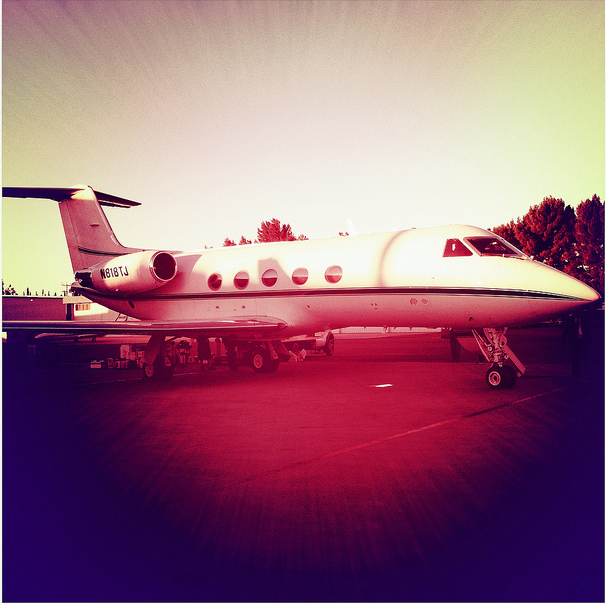
imageI flew in to our prayer meeting this morning on my private jet. A car service whisked me from the airport to the doors of the sanctuary at 5:55, just in time to hear the first notes of the hymns that were raised by the choir before setting the day’s prayer concerns before the congregation. Two hours later I rose from my kneeling position, noting that I was the first to leave of the hundreds of souls gathered, convicting me all over again of my accountability for the spiritual welfare of those God has brought me to shepherd.

Okay, that wasn’t my reality, but it might have been some pastor’s morning!

The truth is I drove my 12 year old creaky pickup truck to the church, arriving at 5:30 to turn on the lights, open the doors and start the computer and projector to display the concerns of the church for the gathered. I don’t do this for my glory or to be noted as a servant. I do it out of love for my God and my church. (We, your pastor included, don’t do this for our glory or to be noticed. We do it out of love for God and Church.) We do what we do out of love for you.

imageThe book of Ezekiel can be a tough read, but it can be a convicting read as well. Turn to chapter 33 and read it with your pastor in mind. He is called to be the Watchman, accountable to God for your spiritual welfare. God has called him or her to warn you of the roaming lion or the sweeping sword.

But if the watchman sees the sword coming and does not blow the trumpet to warn the people and the sword comes and takes the life of one of them, that man will be taken away because of his sin, but I will hold the watchman accountable for his blood.  (vv 33:6)

Few pastors who take passages like this seriously would do what they do, giving sacrificially of their lives for you in return for 30 pieces of lucre. One need only turn the page to the next chapter to see a warning against taking on the role of spiritual shepherd strictly for material gain or personal status. As the prophet records:

This is what the Sovereign Lord says: Woe to the shepherds of Israel who only take care of themselves! Should not shepherds take care of the flock? (vv 34:2b)

Pastoring with love and humility, I wish you grace and peace.

Learning to Kneel – Three

image

So God created man in his own image, in the image God he created him; male and female he created them. Gen 1:27

The first two chapters of the Bible are a commanding call to worship. In these verses we experience the beginnings of God’s revelation of Himself to His creation, a revelation that drives us to our knees as we encounter it. The first words of revelation point us to recognizing the person, presence, power, plan and purpose of God. As our personal relationship with God intensifies, our instinctive response is to worship.

The person of God is revealed through the creation account. It reveals that God is a creator, fashioning something (everything) from nothing. He shows himself to be sustainer, life giver, lover and provider. God’s divinity is on display; no greater being commanded Him to create or what to create. He acts of His own volition. He reveals Himself to be desirous of relationship with another like Him, thus man.

The presence of God reveals that we were created in such a way that we might be aware of His constant presence. Dulled senses can allow us to avoid recognizing it but it grates against our created state. When we allow ourselves to notice the presence, our natural response is to worship.

The power of God is revealed in the magnificence of His creative process. He spoke, it happened. He created, He review and He blessed. All creation sings His worship. Have you ever seen a sunset, the waves against the coast or the intricate society of an ant hill and not seen creation bless its creator?

The plan of God is revealed in His creation. Time propels the plan forward. It demonstrates a God that is moving creation toward an objective. The Bible reveals the objective, a new creation of Heavens and earth. Worship is our part of this plan.

The purpose of God is revealed and that purpose is communion with humankind. He created us with balance as our natural state: labor/rest, worship of the creator/enjoyment of the creation. The purpose is to have companionship with His creation and to have it respond appropriately.

The person, presence, power, plan and purpose of God in creation call us to a single response, worship.

Grace and peace to you.

image Lawrence OP

The Spirit Comes Bearing Gifts

imageThe wind blows wherever it pleases. You hear its sound, but you cannot tell where it comes from or where it is going. (John 3:8)

Doctrine regarding the spiritual gifts is a generally accepted component of the life of the Church. It is recognized that the Holy Spirit empowers redeemed individuals with abilities useful to building up the Body. Individual Christians may be the recipients of one or more of these gifts, evidence of the work of the Spirit in their lives.

Minor intramural skirmishes occur over the enumeration of the gifts and whether Apostle, Teacher-Pastor and prophet are gifts or offices. When it comes to the miraculous gifts – tongues, prophecy and knowledge- however, hard lines are drawn between those who interpret the Scriptures to say that these gifts have ceased and brothers who insist that the Spirit continues to grant these gifts today.

If the boundaries surrounding this theological disagreement were hard and fixed, the various positions would not demand discussion. The problem that arises again and again however, is that the fluid nature of the boundaries creeps from non-essential territory into the categories of core doctrines. The cessationist position may insist that belief in the continuation of gifts shows a sloppy doctrinal position that they assume is present in other facets of one’s theology. A Pentecostal segment of the body states unequivocally that without evidence of glossolalia, your very redemption is in question. Each represents an extreme, but both affect the witness of the Church.

In a series of posts to follow, we will look at four general positions along the continuum of belief. In general, the positions break out as follows:

  • Cessation – The miraculous gifts have ceased being given.
  • Pentecostal/Charismatic – The miraculous gifts continue to be given.
  • Open & Cautious – The gifts may be given by a sovereign spirit as He desires. Their issue is not normative.
  • Third Wave – The proclamation of the Gospel is always accompanied by “signs and wonders”

Grace and peace to you.

Rumors of Faith

image

Are we simply content to watch the American church limp into eternity? Are you ready to drift through the rest of your life, lulled and softened by our comfort and ease?

Darren Whitehead and Jon Tyson, the authors of Rumors of God, surveyed the landscape of the American church and pronounce it still alive beneath the surface. Finding niches of active faith in unexpected places, they see life where many say none exists.

Many have proclaimed the ‘Church’ in America dead or drifting. From some vantage points, this might be the perception that an observer would gather. But crawl under the hood, kick the worn tires and turn the key to the slow-revving starter and you gain a different view; the Church in His people is more than alive and well.

Whitehead and Tyson collect a series of illustrations together, finding signs of vigor in the individual faith of Christians across the Church. Separating these individuals from the Church in its catholic sense creates a false impression though. The heart of the Church, regardless of how we segregate into individual assemblies, is the movement of the Spirit within His people. Perhaps a perspective gained from churches not so far removed from the norm would present a more vibrant body of Christ.

I’m grateful to Thomas Nelson who provided this copy for review.

Psalm 107–Do Tell

image

Let the redeemed of the Lord tell their story – those he redeemed from the hand of the foe, those he gathered from the lands, from east and west, from north and south. (Ps 107:2-3)

The culture that we have developed within the Church puts an emphasis on the shiny, clean you. Reborn, redeemed? Give effusive thanks for that, Christian!

Let them give thanks to the Lord for his unfailing love and his wonderful deeds for mankind for he satisfies the thirsty and fills the hungry with good things. (vv8-9)

The psalmist reminds us, however, of the value of recounting the journey prior to redemption. Others benefit directly and indirectly from the journey, from seeing the hills and valleys overcome. They gain a deeper perspective on redemption when they see sin beaten, sin removed, sin forgiven and washed clean. The psalmist tells of the wandering, the failure, the enslavement, the loss and greed—all forgotten by Yahweh in an instant when His people focused their devotion on Him.

Let the one who is wise heed these things and ponder the loving deeds of the Lord. (v43)

Grace and peace to you.

image Lewis & Clark College

Learning to Kneel–Two

imageDoes the grace, mercy and love of God preserve us from suffering the same fate as that visited upon Nadab and Abihu? Do we no longer heed the words of Moses paraphrasing his experience?

Among those who approach me I will show myself holy;

in the sight of all the people I will be honored. (Lev 10:3)

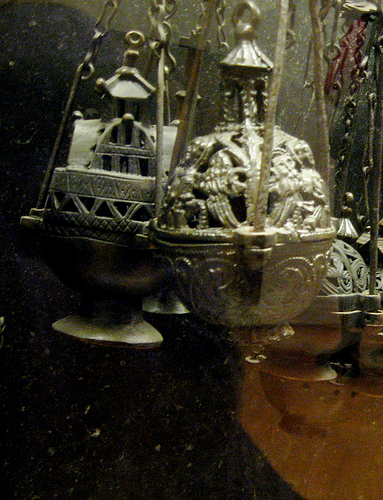
Worshippers read this passage and cannot help but  wonder why God would refuse to be worshipped. The young priests added incense to their censers, lit them and swung them back and forth, spreading the pleasing aroma heavenward.

Only to have it received by Yahweh as the stench of death.

So offensive was the smell to God that he sent fire down the same path that the smoke travelled, instantly killing the priests as one might remove an annoying gnat. So rapid was the response to the impropriety of worship that Aaron, the mouthpiece of Moses, is struck silent.

In our modern worship mindset we ask, why would God be offended at their worship? Why would God be offended at any worship? The passage is silent about God’s reasons, nor are we in a position to demand explanation. God alone sets the standards for worship. We can speculate as to the details of the breach. Perhaps they entered the sanctuary unprepared to worship or came at an inappropriate hour. The fire that lit the censers may have been improperly sourced or unholy. The incense might have been similarly profane.

We don’t know the reasons for God’s offense in the case of the priests, but the encounter must cause us to reflect upon our own worship. Are we equally impious?

The words of Moses are a warning to communities stretching into our own day. We must learn to worship properly so that we may worship properly. 

Grace and peace to you.

image moria

A House Divided

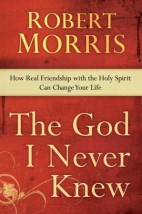
The God I Never Knew by Robert Morris

image

Pastor Robert Morris adds to growing library of works about the often misunderstood and sometimes forgotten third member of the Holy Trinity. This book is his attempt to clear away some of the mystery and confusion that surrounds God in this person.  This volume succeeds wildly on one level, but struggles to find its footing on another.

The first half of the book having to do with the reality of the Holy Spirit and His work is a good addition to the growing attention the Spirit is receiving. It is scriptural and doctrinal, and does a superior job of presenting the reality of the Spirit to a church that is desperately in need of an outpouring of the Spirit’s power. In addition to the fine explication, Morris applies the truths to our daily lives in way that makes us desire more and more of the Spirit.

Sadly, the second part of the book doesn’t hold up the expectations set out in the first. After adhering close to the Evangelical median in his discussion of the reality and work of the Spirit, Morris tips into a scattered series of chapters about separate Baptisms in the Spirit and the miraculous gifts. An extensive presentation of these topics is beneficial to have, but the way in which the author strikes, fires off an anecdote and then moves on is less than satisfying.

Inconsistency aside, The God I Never Knew can serve as a fine introduction to the Spirit or a reminder of the power that He brings to the believer. Some will find the theological diversions unnerving, but understanding the doctrines contributes to the growth of all Christians.

I’m grateful to WaterBrook press who supplied this copy for review.

Learning to Kneel-One

Come, let us bow down in worship, let us kneel before the Lord our Maker;*

imageIf you have ever paddled the quiet waters of a remote lake, gently placing the blades into the water so as not to churn the stillness around you…

If you have ever chanced upon the grandeur of a mountain vista or a verdant valley or the deep crimson of a desert sunset and found yourself quietly absorbing the beauty…

If you have ever held a newborn, warm and taking his first few breaths, and had no words to utter…

… you are familiar with the feelings that overtake you as you truly enter the presence of the Living God.

Many a sanctuary this coming Sunday will be filled, not with awful, prayerful silence overwhelmed by the presence of God, but the noise of a hundred casual conversations that grow slowly louder as more of the brethren enter the room. Bibles will remain closed, guitars will be tuned, and children will play.

As if God will appear at the appointed hour, like the train from Bakersfield, and all we need to do is to be there to meet Him.

Reverence is the first lesson in learning to kneel. This requires a change of attitude and a soul attuned to the Omnipresent God rather than the culturally popular Compartmentalized God. My next post will begin here, unpacking the twin threads of omnipresence and reverence and noting how a heightened awareness of both can radically change our times of worship. This coming Sunday however, enter your sanctuary or meeting room and try sitting quietly, making yourself aware of His enveloping presence. Pray for the service. Pray for the visiting family sitting behind you. Pray a Psalm. See if others follow your lead as the moments tick by toward the first notes of a song. See if your preparation hasn’t brought minutely closer to the throne.

Grace and peace to you.

*Psalm 95:6

image Joshua Conley

Psalm 106 – How Quickly

image

But they soon forgot what he had done and did not wait for his plan to unfold.

In the desert they gave in to their craving; in the wilderness they put God to the test. (Ps 106:13-14)

To read the Old Testament is to thumb through a catalog of mankind’s many failures. As much a diary as it is a mirror, the pages are rife with grotesque and subtle reminders of our own tendencies. In the two psalms that conclude Book IV of the psalter, the psalmists rehearse Israel’s repeated incidents of glorifying and celebrating God for his mighty deeds, followed by a meteoric descent into the waters of the Lethe.

Psalms 105 and 106 must be read together to gain the full impact of the psalmist’s purpose. Where 105 catalogs God’s unending faithfulness to the people who are called by His name, 106 reminds hearers of the incessant unfaithfulness. The juxtaposition of the two is jarring, and we cannot help but marvel at His Love and Israel’s failure.

And the myriad failures in our own lives.

Many times he delivered them, but they were bent on rebellion and they wasted away in their sin. (v43)

The Christian has little excuse for continued purposeful rebellion. The Spirit serves in His role as paraclete in countless ways, one being the early warning when our tendency toward corruption threatens to affect our behavior. We can avoid repeating the history of our family line by becoming more aware and responsive to His whispers, warning us off of unglorifying speech, thoughts and behaviors.

Save us, Lord our God, and gather us from the nations, that we may give thanks to your holy name and glory in your praise. (v47)

Save us, Lord our God, from ourselves and our bent toward failing you. Let us give thanks and praise for your redemption and your power to live out the new creation you’ve begun in us.

Grace and peace to you.

image DaveKav

Follow.Me

One.Life by Scot McKnight

imageThe time has come.

The kingdom of God has come near.

Repent and believe the good news!

Christians are well known for substituting legalism and activity for biblical discipleship of the kind that demands an investment of nothing less than your entire life. McKnight brings his always practical insight to bear on the question of what it should actually look like to walk in the Kingdom of Heaven that Christ announced.

At the core of One.Life is the notion of being all in. That is, life in Christ’s kingdom demands the full commitment of your one life. It was never intended to be a part-time or compartmentalized pursuit. To fully experience the full depth and breadth of the Spirit-enabled kingdom you must go beyond sampling it and make it your complete reality.

Scot touches on a wide variety of beliefs, thoughts and behaviors that generally form the contours of the Christian life, examining each in a kingdom light. In some ways, the book is The Jesus Creed part two. Where that volume helped us to flesh out what it meant to love God above all and love our neighbors as ourselves, One.Life challenges every area of life that we might be tempted to separate as outside of the kingdom.

One.Life is eminently practical on nearly every page. Professor McKnight has a lifetime of experience from which to share examples and the reader will find a variety of lives that mirror their own experiences from which lessons can be extracted. “…the Kingdom.Life only happens when you give yourself (your One.Life) to Jesus, and that means also to His kingdom dream and to those who are in that kingdom dream already.”

One.Life at Zondervan

I’m grateful to Zondervan who provided this copy for review.