
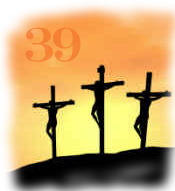
 Worship Craft is offering this free background image for your worship presentation software or PowerPoint or for your desktop. This Lent image is drawn from the reading for Sunday one in Psalm 91. Download it here.

Worship Craft is offering this free background image for your worship presentation software or PowerPoint or for your desktop. This Lent image is drawn from the reading for Sunday one in Psalm 91. Download it here.
 “I walk into a large white room. It’s a dance studio in midtown Manhattan. I’m wearing a sweatshirt, faded jeans, and Nike cross-trainers. The room is lined with eight-foot-high mirrors. There’s a boom box in the corner. The floor is clean, virtually spotless if you don’t count the thousands of skid marks and footprints left there by dancers rehearsing. Other than the mirror, the boom box, the skid marks, and me, the room is empty.”
Everyone who creates must begin here; the environment and your tools. For the woodworker there is the wood and your edge tools. The writer begins with a blank screen and the keyboard, the photographer with a lens and unexposed film, and the teacher with knowledge and a course schedule. The process of creating something from nothing is difficult, challenging work that often finds you bumping up against a variety of blocks. Preparation to create is the key to climbing over these obstacles to mine the creative gold that lies on the other side.
The renowned choreographer Twyla Tharp shares the core elements that she relies upon to create new dances over and over throughout the decades of her storied career. Key to the process of creating is to prepare yourself to create. You will not run a marathon without having trained yourself to go that distance. A table will not be created from that expensive walnut without your having learned find it in the wood. Why do we expect creativity to simply flow without having trained ourselves to be prepared to harvest the flow?
Tharp’s theme throughout is to emphasize the habits that the truly creative people develop. She relates her own rituals as well as those of other creatives to point you toward finding your own set of habits that will prepare and arrange you in the place where your mind and soul are prepared to create. Be at your keyboard, with your camera, in your workshop and your brain will automatically know that it is time to create.
But I’m not creative, you say. Twyla would say nonsense! You simply have not prepared yourself to create. You have not identified your specific creative spark, you have not developed a process (The Box), you have put yourself in a place to scratch, you have not identified the core of the work (The Spine), and you have not put the time into the basics (Skill) that must be second nature so that creativity can put them to use in new forms.
Tharp’s book is not a manual but rather, an inspiration. She is not telling you to follow her method step by step. Instead Twyla practically demands that you find your personal method, strengthen it and make it tough, and then put yourself in a position of letting it work for you. Savor the book; get a pencil and make it your own.
Now, get out and create something.
Notes:
Pastors and other ministry leaders might look at a book like this and wonder what it might have to offer them. In reality, is there any more demanding job than preparing to speak God’s word each week? God is a Creative Entity and he has placed this in you. Train yourself to be creative, know your skills (scripture and theology), and let that creativity color the work you produce each week.
Merlin turned me on to this book and many of us can benefit from the new direction he has taken 43 Folders. The language and humor can be a little coarse so be aware but check out what he has to say and who he links to if you want to continue to grow in your creativity.
Remembering New Orleans and looking forward.
The alternate selection for Lent…
]

All of you, clothe yourselves with humility toward one another, because
“God opposes the proud but gives grace to the humble.” (1 Peter 5:5)
Any journey gets immeasurably easier when the destination comes into sight. In our lives, our objective is to submit to the transformative work of the Holy Spirit as he leads us to finally become Christlike, but many times, I know that I have trouble seeing how my current state will ever be like the glorious Lord. Sometimes we find our confidence growing as we look toward intermediate markers along the road, things that can be reached in a shorter period. Watching Peter stumble along trying to follow Jesus but stubbing his toes over and over along the way we find a fellow follower more in our image.
Peter brings us hope as we step toward the cross because even though he is flawed like us, he get’s it after learning things the hard way. We get angry, we blurt out inappropriate things, we fail to see what is right before us, and we even fail to see the bigger picture but Peter gives us hope because his messy transformation is our halting, sputtering, tumbling transformation. Not perfect by any stretch, but humbly following close behind our savior.
When he had finished speaking, he said to Simon, “Put out into deep water, and let down the nets for a catch.”
Simon answered, “Master, we’ve worked hard all night and haven’t caught anything. But because you say so, I will let down the nets.”
When they had done so, they caught such a large number of fish that their nets began to break. So they signaled their partners in the other boat to come and help them, and they came and filled both boats so full that they began to sink.
When Simon Peter saw this, he fell at Jesus’ knees and said, “Go away from me, Lord; I am a sinful man!” For he and all his companions were astonished at the catch of fish they had taken, and so were James and John, the sons of Zebedee, Simon’s partners.
Then Jesus said to Simon, “Don’t be afraid; from now on you will catch men.” So they pulled their boats up on shore, left everything and followed him. (Luke 5:4-11)
In Luke’s gospel we see a much more vivid picture of the man Peter and his introduction to Jesus. The Lord is watching the disappointed fisherman clean their nets after laboring hard all night without any reward and his first test is to ask them to put their boats back out into the lake so that he might teach the crowds. Andrew and Simeon comply, sitting back against the gunwales to listen to the young Rabbi. When Jesus finished, he turned to the fisherman and invited him to put his freshly cleaned and bundled nets back in the water. Do we see the immediately obedient Peter? No, we see the tired and cranky Peter who attempts to dissuade the Lord from fulfilling His mission. Does he not know any better? Do we view our own hesitance as stumbling blocks?
When Peter does obey on the word of the Teacher, he is shocked at the immediate results of doing so as he watches his nets bulge to the breaking point. So Peter’s obedience has resulted in abundant reward, like an ancient prosperity gospel but the greater reward is still to be realized. As Peter becomes aware of the one who has rewarded him, he begs him to go away since he knows that he is in no condition to be in the presence of holiness. (Does this sound familiar to us?) Jesus is not deterred, however, from assembling his team and he calls on Peter to follow him.
Peter, looking at all of the new found riches flopping about in his nets, does so without hesitation.

As Jesus was walking beside the Sea of Galilee, he saw two brothers, Simon called Peter and his brother Andrew. They were casting a net into the lake, for they were fisherman. “Come, follow me,” Jesus said, “and I will make you fishers of men.” At once they left their nets and followed him.(Mt 4:18-20)
Simon Peter takes his first step toward the cross in this account in Matthew’s gospel. As we read in devotions and heard from our pastors, Peter is instantly obedient to Christ. We are encouraged to model our own behavior on this sacrificial submission, leaving everything behind and following Him. Though it may be unspoken, there is a subtle underlying message that weighs on our souls: the glory of the passing Lord and His invitation to follow Him should be sufficient for a complete break with our previous life.
Reality is rarely this simple.
We desperately want to follow the Lord, shouldering our cross and never turning back, but our self-love often overpowers our Christ love. Struggle with our worldly selves and desires often marks our steps more than piety when we follow the Lord. The temptation in our weaker moments is to set down the cross for a less strenuous form of Christianity. As we follow Peter toward the cross at Calvary, we will discover that despite this initial bright moment, he struggles in many of same ways we do. Faith in the Spirit carries us both forward.
Read Ron Walter’s insightful piece on the contrast between private and public leadership in the Church. Two questions to consider today:
Who do others say I Am?
Who do you say I Am?
 In a previous post, I voiced dislike for the friction created by the church coffee shop that tended to snag folks on the way into worship. It caused not to be fully present to worship, distracted as they were by coffee, chat, and momentary community. Meanwhile, little thought was given to the disruption of these brothers and sisters filtering in during times of praise and prayer, sidling into rows and breaking any focus that earlier arriving worshippers were enjoying.
Perhaps there is a via media that can work. Much like a ball park in the seventh inning, a local church that emphasizes worship closes the cafe ten minutes prior to every service as a way of encouraging worshippers to move inside of the sanctuary and to prepare themselves for a move of the Spirit. Caffeinated no less!
Priorities…
The Lord is the strength of His people, a fortress of salvation for anointed one.
Save your people and bless your inheritance; be their shepherd and carry them forever. (vv 8-9)
Read this psalm backwards. By doing so you will discover a contrasting pattern to our human priorities. The psalmist praises the great glory of God, linking Him to shepherd of Psalm 23 and intercedes on behalf of God’s people similar to the cry in Psalm 25.
Praise be to the Lord, for he has heard my cry for mercy.
The Lord is my strength and my shield; my heart trusts in him, and I am helped.
My heart leaps for joy and I will give thanks to him in song. (vv 6-7)
The Lord is so good to His people, to those who trust Him. We are moved to ask, what have we to fear then? Is there a hint of doubt in the opening verses of this prayer? When we read from the beginning, the pleas of David mirror our own concerns that God might not hear us, that he might have turned away.
To you I call, O Lord my Rock; do not turn a deaf ear to me.
For if you remain silent, I will be like those who have gone down to the pit.
Hear my cry for mercy as I call to you for help, as I lift up my hands toward your Most Holy Place. (vv 1-2)
The plea is subtle but important. As David voices his wish to be heard by God, he does not doubt but rather, praises Him by saying that the absence of His voice alone is like being dragged to the pit. To say that we are nothing without the immediacy of God’s presence and His all encompassing holiness is praise of a better quality than some of the prom songs that we lift up to him on Sundays. Our foremost act of worship is to recognize hell as being His absence. Though there may have a time in our lives when we sought to escape Him, to know His closeness and then discover it gone is the worst imaginable fate.

 LOVE | ACCEPT | FORGIVE