

The display doesn’t do justice to the depth of color in this gorgeous flower. Enjoy the glory.
The display doesn’t do justice to the depth of color in this gorgeous flower. Enjoy the glory.
Later this summer, I’m teaching a section of Religion in America in our Themes in Religion and Culture curriculum. The course examines the intersection of various religious traditions and the pluralistic culture of America to see how each contributes and affects the cultural religion of this society. In order to contribute to this discussion, students will need to be clear on the boundaries created by their personal definition of religion and cultural religion. Since many very smart people drop by here from time to time, I would like to enlist your help. Can you provide a definition for both of these terms?
I’m preaching from John chapter one this morning and there is a passage which offers much hope to those of us who have prayed and shared and done everything we could to brings friends and family to Christ without any outward signs of movement. When Jesus runs into the skeptical Nathanael (“can anything good come from Nazareth?”) he sees something that we don’t. He sees that the Spirit has already been at work in Nate and that his heart has already turned toward the Messiah. Philip who shared his witness with Nate sure didn’t see it and his outward behavior sure doesn’t show it but Jesus knows it.
You and I never know how the Spirit is working in someone but the Lord does. Trust Him and take hope that He will leave none of His own behind.
Be blessed
We’ve all found ourselves in the situation described by Andrea at her blog where we don’t follow the scripted way of sharing the Truth with our friends or loved ones. Do you find yourself ashamed and disheartened, seeing your efforts at failure or do you trust God enough to work through your frailties and make His own truth known?
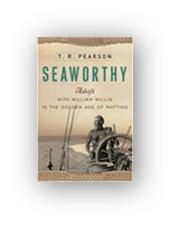 I live torn between my two landscape loves, the mountains and the oceans but when it comes to literary choices, I’m a sucker for anything that occurs out on the wide open seas, particularly in a wind-driven craft. The photograph that graces the cover of Seaworthy of an emaciated, but whip strong, William Willis guiding one of his handmade craft out on the loneliness of the ocean is all by itself enough to draw me in. The story the lies between the covers is an adventure like you’ve never read, mostly because Willis embarks upon the solo ocean journeys voluntarily and often against the advice of friends and family. The novelist T.R. Pearson takes us along onboard the various ships and into the various ports of call that Willis visits, often making us feel the salt spray, the tumult of the tides, and the discomfort of being constantly damp.
The tale of William Willis is a little known bit of sailing lore, being the story of a man who at the age of 60 decides to cross the Pacific on a raft made of lashed together balsa logs alone. Unlike the better known Kon-Tiki expedition years earlier which carried a crew and an anthropological objective, Willis made the decision to embark upon his voyage simply because he couldn’t sit still. A love for the open sea combined with an obvious inability to function normally in polite society ignited the passionate pursuit of the trip. Though his wife Teddy is vocally against the trip, she acquiesces too easily in the end, perhaps knowing the Willis has no mechanism within him to comprehend  the wisdom of his adventure.
Willis displays flashes of genius to temper his inability to complete his preparations or his need to face danger eye to eye. His days at sea are filled with mundane chores, care for his hernias, seeking peace with his shipmate animals, and questions about the wisdom of his endeavor. When we find ourselves in the chilly water with him after falling overboard, we along with Willis see the raft in the distance and wonder if this is the end, watching the raft lumber along ahead of him just out of reach. We wait cringing as he contemplates some shipboard exploratory surgery with whatever rusty implement he has at hand. We wonder why, in our own lives, we can’t summon the courage to do things just to do them and to prove our mettle only to ourselves.
Pearson takes the reader on two Pacific cruises filled with adventure; the second has Willis leaving port at the age of 70. His prose is an excellent transition from novel to non-fiction and the book is just right in its length. From his early prison break escapade to his last voyage across the Atlantic in a glorified rowboat, the reader is engaged in the life of a most interesting man. Little is said about his wife and we are left to wonder is she too was a bit of a vicarious adventurer, living through her companion and knowing the muse that drove him.
This is an excellent addition to your library. We can only hope that T.R. Pearson treats us to another real life tale somewhere down the line mixed in with his other storytelling.
Scot McKnight confronts our gospel of individuality and the problems that derive from it over at Out of Ur. He asks:
What then is Christian spirituality? It is the person who is restored to God, to self, to others and the world – all four directions for all time – by a gospel that emerges from a “communal God” (the Trinity) to create a community that reflects who God is. Do we preach a gospel that gives rise to holistic restoration and that can create a fully biblical spirituality?
The individuality-gospel that is found in many churches (maybe mine, maybe yours) not only has a damaging effect on our spiritual transformation, it is an incomplete representation of the God we serve. We lose the restored community facet of the good news when our gospel is personal alone. McKnight calls this gospel a parody – it’s painful to think of the label that applies to the poor pastor who presents this kind of message.
What I found intriguing in the light of some discussions I have been involved in this week is this:
Let us not suppose that any of these examples has simplistic explanations, but let us think a little more systemically: if we preach a gospel that is entirely focused on “getting right with God” but which does not include in that presentation that God’s intent is to form a community (the Church) in which restored persons live out this Christ-shaped and Spirit-directed spirituality, then we can expect to hear lots of pulpit rhetoric exhorting us that the Church matters. And, if we discover on Sunday morning that everyone in our church is the same ethnically and economically, we can be sure that we are preaching something that is attracting only those kinds of people. And if we are hesitant to admit the implication of this ethnic, economic reality, then we need to be more honest with ourselves. We get what we preach. And we perform what we preach. How we live reveals the gospel we responded to and the gospel we believe.
Read the whole post and chew on it a bit before responding. Better yet, let the Spirit guide your reading and see what comes of it.

This is one of the favorites in my collection. Akira Takasaki of the Japanese band Loudness raging at the now defunct Stone in San Francisco. This band is huge in Japan but only picked up a niche following in the U.S. Technically brilliant, Takasaki is a virtuoso guitar player and the rest of the band keeps up with him. The only drawback for American ragers is that we spoke little Japanese and the phoenetic English that was used in some of the songs was very difficult to understand.
Interesting side note, these guys almost made it to my wedding. Ten minutes more…but alas it was not to be. The singer also showed up back in the Bay Area about a year later looking for a woman to marry so that he could stay in the US, but that is another story…
Labberton comes to the end of The Dangerous Act of Worship with the answer to the question that has been gnawing at the reader from the first page; how? We have been reminded on each page that everything that matters is at stake in worship. The nudge that opens our eyes to see the world as God does comes through worship. Our hearts rent for justice are a result of worship. Labberton repeats his earlier assertion that we are to be people who heed God’s call to live out our worship in such a way that justice becomes an identifying mark, a testimony to Jesus and His transformative power. And yet, we remain asleep, drowsy from a lack of direction. He offers four concrete steps to rousing ourselves.
First, we must decide for ourselves to worship fully and faithfully. Worship is not measured in attendance and praise singing, it must be a way of life. A worshipful life involves full submission to His Lordship, to dying a little bit to gain a bit more of Him. In doing so our eyes open wider and wider, preparing us to…
Second, choose to see the injustice around us that cries out to be addressed by the transformative power of Jesus Christ. As our blurry vision clears, we must make the effort to focus it on the hungry, the thirsty, the imprisoned, and the oppressive forces that put God’s people in those positions. We see it and as an act of worship…
Third, we choose to engage it. It does no good to simply see injustice, to have viewed it for emotional purposes like a painting in a gallery. Unlike walking away from the picture and promptly forgetting the details, Christ’s brothers and sisters should choose to keep the injustice in clear view. We examine it from all angles in order to restore justice to the situation from as many perspectives as possible. Our vision is filled with the needs of others, trusting in God for our own, so that we can worshipfully…
Four, choose to actively love others as Jesus Himself loves them. We will choose to love in full acceptance and in forgiveness. “When we choose to love in the name of Christ for the sake of justice, we allow our compassion to take us to people and to places for the sake of the other person, in advocacy for their need, out of a compassion for their suffering, even when it means sacrifice and suffering for us.”
Is our worship dangerous to our lives as we have known them? If not, the moment to begin is now. We have the promises of the Father for the future but a vocation to fulfill here in this broken world. It is through true worshippers that justice is restored. Labberton concludes with these questions that we must all ask ourselves:
Are we who follow Jesus Christ believing and acting out what God considers the matters of first importance? Or are we, as I fear, asleep to the real passions of God and the real needs of the world? More specifically, do our lives and practices of worship lead us to live in the ways that matter to God?
Peace be with you.
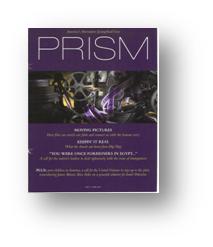 I have an article in the latest PRISM magazine. It talks about the fallout from the Rick Warren invitation to Barack Obama to speak at the Saddleback AIDS conference. My contention is that we as a community led by Jesus need to put aside denominational and perhaps faith differences in order to seek to good of the city (as Jeremiah would put it.) Give it a peek and let me know what you think.

New life is always a welcome sight. The delicate pink and white blossoms of the apple tree contrast nicely with the deep blue Rocky Mountain skies.
 LOVE | ACCEPT | FORGIVE